Destination portrait
Costa Rica
Follow the water to a different forest.
Two coasts, different calendars
Costa Rica's compact outline contains more than one rhythm. Its Pacific and Caribbean rainfall regimes differ. The Pacific has a broadly December-to-March dry season; the Caribbean has no well-defined dry season, with relatively drier February-to-March and September-to-October periods. A month therefore means something different on the other side of the mountains. The coast belongs in the decision before the accommodation photograph.
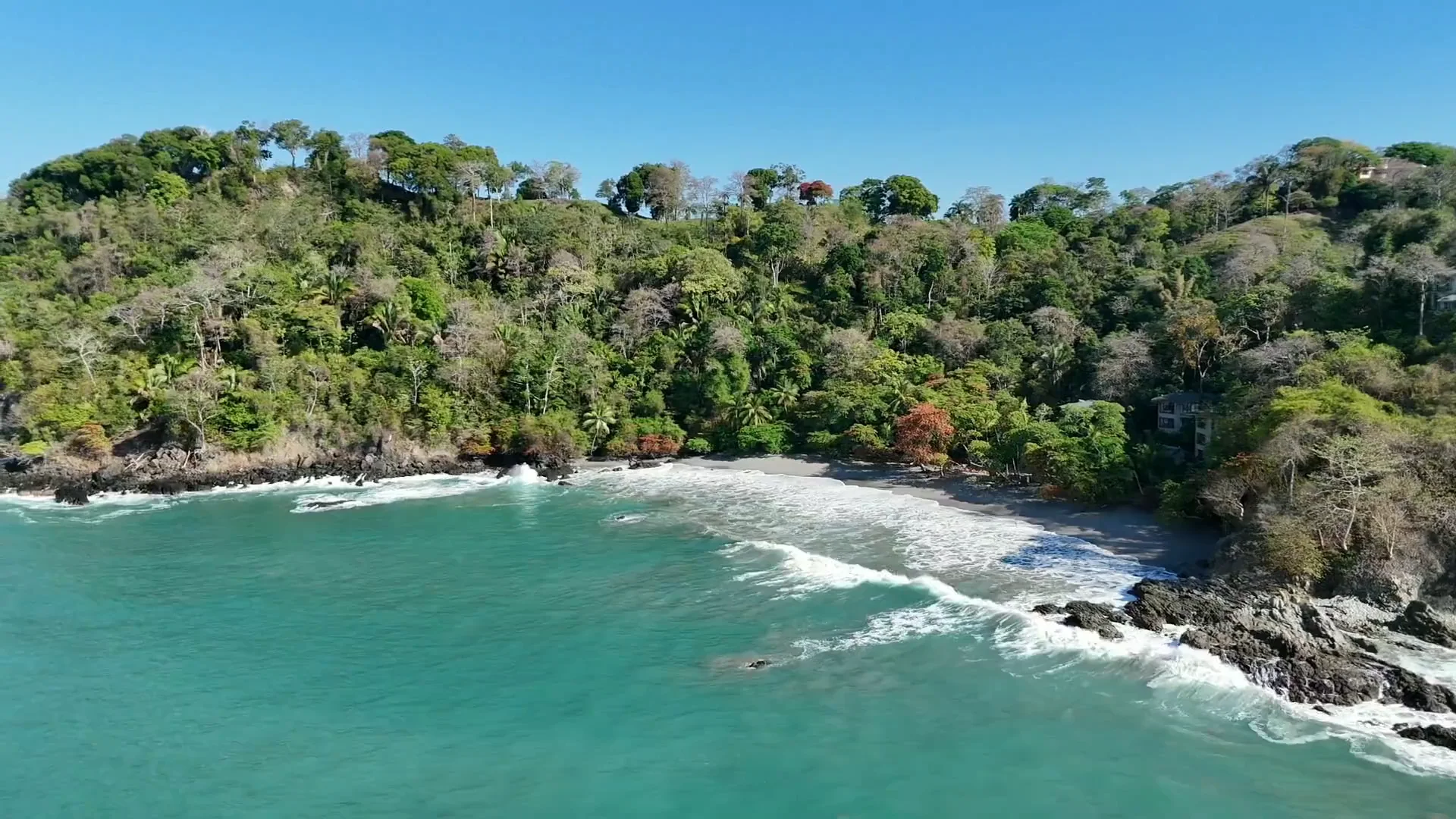
Water gives the interior its own possibilities too. Rivers, canals, a gulf and a forest-fringed shore are not interchangeable versions of a tropical holiday. Following one of those settings can give the journey a more particular character than the familiar promise of forest followed by beach.
The northern interior and the Caribbean
The Northern Plains bring La Fortuna and Arenal, hot springs and the rivers around Sarapiquí into an interior stay. Here, a forest-and-river interest can hold the days together before any coastal chapter begins. Arenal's volcanic form gives the interior a landmark, while the rivers lead attention into the forest around it.
On the northern Caribbean, the waterways around Tortuguero and Barra del Colorado suggest another kind of approach. Farther south, Cahuita and Puerto Viejo belong to a coastal setting with its own communities, food and music. The northern canals and the southern coast offer different ways of spending time, even though both sit beneath the same broad Caribbean heading.
That distinction can shape a visit more usefully than adding another stop. Someone drawn to waterway exploration is following a different interest from a traveller who wants a sustained coastal base. The country becomes clearer when its place names carry those differences, rather than disappearing into one long list of activities.
A gulf, a wetland, a Pacific edge
The South Pacific opens another set of landscapes through Osa and Corcovado, Golfo Dulce and the Sierpe-Térraba wetlands. Sierpe is also an access base for boat journeys towards Drake, Caño and Corcovado. Water is part of the approach as well as the reason for visiting. A boat-access chapter and a road-based coastal stay make different use of the same holiday's time.
This is where a little restraint can deepen a route. An interior stay and one carefully chosen coast already offer a strong contrast. Adding the other coast or a remote southern chapter should develop the original interest, rather than merely make the map look more complete. The journey collection offers a forest-and-coast outline to begin with; the regional guide helps compare alternatives.
Costa Rica rewards the distinction between kinds of water: a northern river, a Caribbean channel, a sheltered gulf, Pacific surf. Choose the one that draws you first, and the forest around it begins to feel like a place rather than a general idea.