
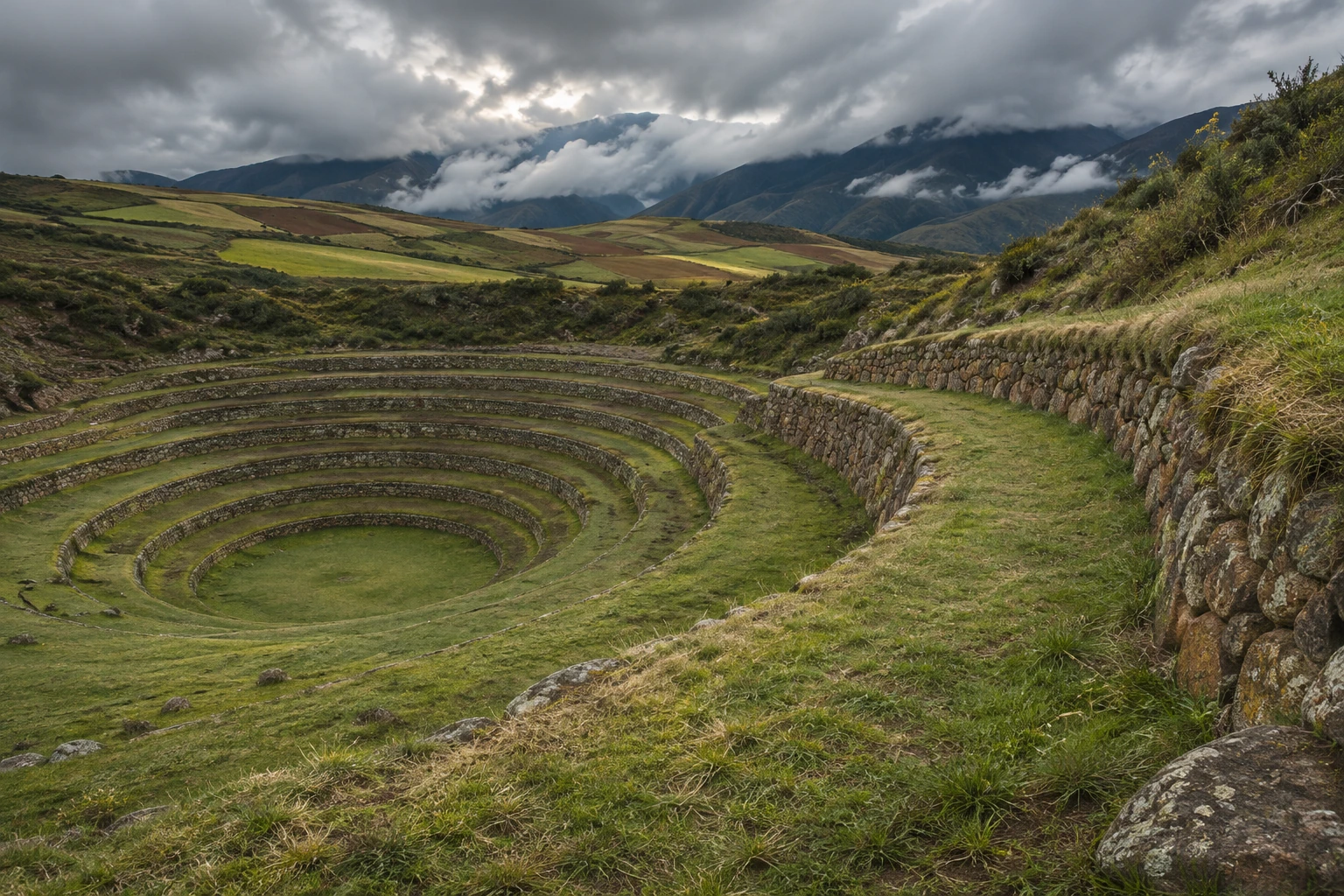
On 23 June 1802, Alexander von Humboldt, Aimé Bonpland, Carlos Montúfar and a servant carrying the barometer continued high on Chimborazo. Montúfar’s diary, transcribed and compared with Humboldt’s by scholar Reinhard Andress, records a chasm that stopped the ascent. The two accounts give different attention to the same journey. For a modern Latin America itinerary, begin with the environments and transitions that matter to the traveller, rather than treating a regional label as one uniform place.
Why begin a modern journey with two accounts of one mountain?
Montúfar’s diary puts the party in Calpi on 22 June, with the ascent the following day. The approach began on horseback before continuing on foot. Andress’s comparison of the diaries preserves the larger human group, including the person carrying the instrument and Indigenous companions who accompanied part of the ascent.
The Berlin library catalogue’s transcription of Humboldt’s diary gives another route into the day. It records the date and remarks on the terrain and cold. The surviving observations place admiration beside physical difficulty. The accounts describe a group moving through changing conditions, carrying an instrument, and eventually unable to continue along the route.
Humboldt wrote, in translation, The terrain is magnificent.
His diary also records cold feet and snow-water entering the boots. Admiration and physical effort survive together in the record.
The diaries differ in what receives attention. Humboldt’s record gives measurements and bodily symptoms considerable space; Montúfar’s is more compressed and attends to the descent. Andress discusses those differences, but a reader need not turn them into certain explanations of motive. Two travellers can record one day differently. That is a useful thought for planning a shared holiday: a common route does not guarantee an identical experience of effort, interest or comfort.
The later Humboldt and Bonpland plant-geography diagram described by the Smithsonian arranges plants by observed altitude and relates them to the underlying rock. The museum dates the illustrated object to 1805. The image makes the mountain more than a summit objective. It becomes a way of comparing environments, with relationships visible across a vertical span. The diagram developed the journey’s observations into a comparative view.
A later artist changed the frame again. The Smithsonian’s account of Frederic Edwin Church’s Chimborazo study places it in his 1857 journey and relates it to Heart of the Andes in 1859. That is the cultural afterlife of the landscape, not an eyewitness image of the 1802 climb. One place can be scientific evidence, remembered effort and artistic construction at different moments. A traveller can choose which of those interests deserves time.
Chimborazo is in Ecuador. It is our historical lens, not an instruction to add another country to your itinerary. The practical inference is to compare actual environments before treating nearby names as a coherent holiday. Elevation, climate, access and the kind of day a place invites can change across a route. Give the principal experience enough space, then ask whether the proposed additions strengthen it or merely enlarge the itinerary heading.
Humboldt’s later diary remark about better weather on another day also has a modest planning relevance. It belongs to a different entry, not the ascent itself. A route cannot arrange the past differently, and a holiday cannot guarantee the preferred conditions on a single appointed morning. What it can do is leave a sensible degree of flexibility when the main interest depends on the outdoors. That flexibility must fit the actual reservations and programme.
What should hold the journey together?
One anchor experience should hold the journey together. It can be a particular landscape, a cultural interest, a family gathering or a fixed event. Write that purpose in a sentence and let it decide the first major choices. The result might be one country explored in depth or two countries linked by a clear interest. A larger country count does not automatically make the journey more complete.
Use the anchor to make trade-offs visible. If an Andean visit is essential, protect the time and physical pace it requires before adding a coast. If Patagonia is the central interest, choose the access and seasonal programme before selecting a city stop. The Argentina tourism portal separates planning and activities for a reason: inspiration needs a second stage in which a place becomes an actual stay.
Describe interests in ordinary language. Say whether you want sustained walking, interpretation of historical places, time by water or a comfortable base for short outings. The word adventure can mean very different days to different people. A planner can make a better proposal when the brief explains what you enjoy doing and what you would rather avoid.
| Time | Route shape | What to protect |
|---|---|---|
| About a week | One main base and simple extension | Time at the anchor |
| About two weeks | A few contrasting settings | Complete transfer days |
| Three weeks or more | Consider another major region | Time for its access |
Consider the different interests grouped inside one country. Mendoza’s official tourism account places it in western Cuyo and distinguishes wine-country and Andean activities. Its seasonal recommendations differ with the activity. That is a more useful beginning than asking for one best month for Argentina. If wine and mountain time are both desired, explain which matters most and ask how the proposed days would support each.
Architecture can be an equally strong anchor. UNESCO’s Arequipa account describes European designs combined with native masonry techniques, with sillar courtyards, vaults and façades. A traveller drawn to that material history is asking a different Peru question from one centred on a long mountain walk. The country can accommodate different interests, but a short journey should not be expected to develop all of them at once.
In Belize, Hopkins offers a living Garifuna cultural setting, with food and drumming among the tourism board’s points of introduction. That can be a reason for a journey in its own right. Ask how the visit can be respectful and relevant to the traveller’s interest, rather than treating a community as a scheduled performance automatically available on demand. The anchor should be a curiosity to pursue, not a promise made on other people’s behalf.
How many places fit the time you have?
Count useful destination days before counting countries. A week can support one principal base and a straightforward extension. Two weeks can give a small number of contrasting places a satisfying rhythm. With more time, another major region becomes possible, provided its access does not consume the extra days. These are starting principles to test against your actual arrival and departure.
Read a transfer from one room to the next. Packing, check-out, ground transport, waiting, the journey itself, arrival processing and the final approach all occupy time. A short flight does not create a short travel day. Remote stays can add a boat or road movement after the principal journey, making the gateway night essential to the route.
Ask the proposal to show what a new stop replaces. If adding another country removes a full day from the place that motivated the holiday, compare both versions before choosing. Our fourteen-day Brazil route demonstrates one such allocation. Its smaller number of main settings leaves room for the differences between city, falls and historical coast to register.
Geography sometimes unsettles even a familiar national route. Argentina’s Atlantic road account explains that reaching Ushuaia by road involves a Chilean section and a Strait of Magellan ferry. The fact changes the kind of plan required. A route that appears to remain inside one country can still need international and maritime arrangements. Read the actual sequence rather than letting the national label settle the question too early.
Chile’s Chiloé guidance likewise distinguishes an approach through Mocopulli and Castro from one through Puerto Montt and a ferry at Pargua. Those structures are different even before schedules are checked. A gateway night can therefore have a practical purpose. Ask what it protects and how the next day begins, then decide whether the extra movement contributes enough to the holiday’s central interest.
In the north, San Pedro de Atacama’s Calama gateway still leaves an onward road leg. The airport name is only one part of the arrival. Put that final movement into the day before planning an essential excursion. This is a simple way to compare the itinerary imagined through place names with the one experienced through departures, waiting and check-in. The second is the calendar the traveller actually lives.
When does Brazil and Argentina make a coherent pairing?
It can be coherent when the chosen experiences justify the international movement. Iguaçu supplies a particularly clear example: the waterfall system spans the two countries, yet the visitor encounters separate parks and border arrangements. A shared natural landmark creates a reason for crossing, but it does not remove the crossing’s practical requirements.
Beyond that shared landscape, decide what each country contributes to the story. A cultural city stay and a nature region can complement one another if the travel sequence works. Avoid treating Buenos Aires as an automatic add-on simply because it appears under the same regional heading. Give the city a purpose and enough time, or keep it for a journey that can do so.
For a combined itinerary, ask which company meets the traveller after each arrival and how the next service receives a change. The international flight and the local transfer may sit in different bookings. That division needs a clear communication plan. A traveller should be able to identify the next contact without reconstructing the commercial chain behind the holiday.
A Buenos Aires chapter can be given a specific cultural focus. The official country account places Plaza de Mayo among the Cabildo, Casa Rosada and cathedral. A guide can build a city conversation around the relationships between public space, institutions and history. That is a reason to allocate time, not simply a conventional stop before nature. Ask what the city contributes to the larger journey you want to make.
Iguaçu offers a different connection between the two countries. The Argentine park cultural history includes Mbyá Guaraní communities as well as the institutional story of protection. That breadth helps the visit become more than a border-crossing exercise. Choose whether both national approaches add something meaningful for the party, then give the international movement its own practical attention.
Ada Tours’ multi-country coordination account supplies a relevant operating perspective once the places have been chosen. It describes one working route across Brazil, Argentina, Chile and Peru, with local contacts and a revision workflow. An agency can use that approach to ask who maintains the current version and who receives arrival changes. Coordination should make the chosen geography easier to manage, rather than persuade the client to include more geography than the dates support.
What does Peru ask you to decide early?
Peru asks you to connect the desired visit with physical pace and reserved access. UNESCO’s Machu Picchu account establishes its mountain-forest setting and altitude. It does not establish current ticket circuits or availability. Choose the desired experience, then check the exact visitor arrangements through official channels for the dates you intend to travel.
Altitude deserves an individual conversation rather than a universal timetable copied from another traveller. Describe the route, the activities and any relevant needs to an appropriate health professional. In the itinerary itself, protect time to settle and avoid making the first demanding visit dependent on an optimistic arrival. The aim is to enjoy the place with enough energy to attend to it.
The Peru portrait introduces a wider choice between coast, cities and the Andes. A visit centred on heritage can still have changes of scale and pace. Ask the planner to show how the approach contributes to the experience, rather than treating every intermediate night as a necessary inconvenience before a single famous site.
Peru’s Sacred Valley account names places that can develop an Andean chapter beyond one famous sanctuary: Maras, Moray, Pisac, Chinchero and Ollantaytambo, set among the Urubamba mountains and Vilcanota River. These are choices for a route, not a checklist to complete in a single day. Explain whether the interest is archaeology, landscape, villages or a particular combination, and ask the planner to allocate time accordingly.
Arequipa’s sillar architecture opens another cultural direction. Courtyards, vaults and façades give the city a different scale of looking from the Sacred Valley. Combining the two can be rewarding if the journey leaves time for both, but the decision should include the travel it adds. The architectural interest can also justify a separate trip rather than becoming a brief stop added only because the country is already on the ticket.
The Nasca and Palpa geoglyphs belong to the arid coastal plain south of Lima. They are not another nearby Andean attraction to fold into the Cusco chapter without a new route discussion. Their geometric and representational forms offer a distinct cultural landscape. A planner should explain the access and experience proposed for your dates, while keeping interpretation separate from unsupported promises about flights or viewing arrangements.
How do Chile’s different landscapes change the sequence?
Chile’s regions change a journey through their landscapes and their approaches. Patagonia makes gateway and seasonal choices important; the desert, central coast and southern islands introduce different possibilities.
Patagonia puts gateway and seasonal choices near the beginning of the plan. Chile’s official Torres del Paine page distinguishes access through Puerto Natales and Punta Arenas, including seasonal flight considerations. Check current operations before fixing the rest of the route. The airport that looks closest on a map is only useful if the whole sequence works for your dates.
Choose the level of activity before selecting accommodation. A walking-led stay and a landscape-focused holiday with shorter outings can use the same broad region differently. Explain distance, surfaces and comfort needs in practical terms. Ask what happens when outdoor plans change, and choose a stay whose quieter hours also appeal to you.
A Chile and Argentina combination needs an explicit border and transport plan. Do not assume a continuous ground circuit from the fact that both countries share Patagonia. The particular crossing, accommodation sequence and vehicle arrangements must fit together. Our Chile portrait and Argentina portrait help separate the country choices before a regional planner joins them.
Chile’s San Pedro de Atacama description links Moon Valley, Tatio, salt flats, lagoons and skywatching. The variety is meaningful, but it does not mean each can be added without affecting the day. Desert days and cold nights also ask for different clothing and comfort expectations. Ask which experiences form the heart of the stay, then compare the amount of movement required to reach them.
Valparaíso’s port-city hills, elevators and La Sebastiana create a cultural contrast to the desert. Its access through Santiago and a land continuation is another sequence to plan, not an incidental transition. A city chapter can justify that movement when it develops an interest the traveller cares about. Confirm current operation of any particular attraction rather than treating a destination description as a timetable.
Chiloé’s stilt houses, wooden churches, evergreen forest and coast offer another distinct Chile. The island’s appeal cannot be represented by changing the name of a Patagonia walking programme. Rain, roads and ferry structures affect its rhythm. Ask for a route that belongs to the island, with time to experience the places that made you choose it. Selecting one landscape well can be more satisfying than assembling every Chilean contrast in a short visit.
Why treat Costa Rica and Belize as journeys in their own right?
They deserve their own route logic because forest, coast and local cultural places each need time. Costa Rica’s official climate guidance distinguishes Pacific and Caribbean rainfall patterns. A national dry-season shortcut can therefore mislead the traveller choosing a particular coast. Start with the exact regions and activities before transferring advice from one side of the country to the other.
The Costa Rica trade portal groups itinerary ideas around family, romance, adventure and wellness. That structure is useful because it begins with the traveller’s purpose. A forest-and-coast holiday becomes more coherent when the stays are selected to support the same kind of day, rather than being chosen independently from two attractive photographs.
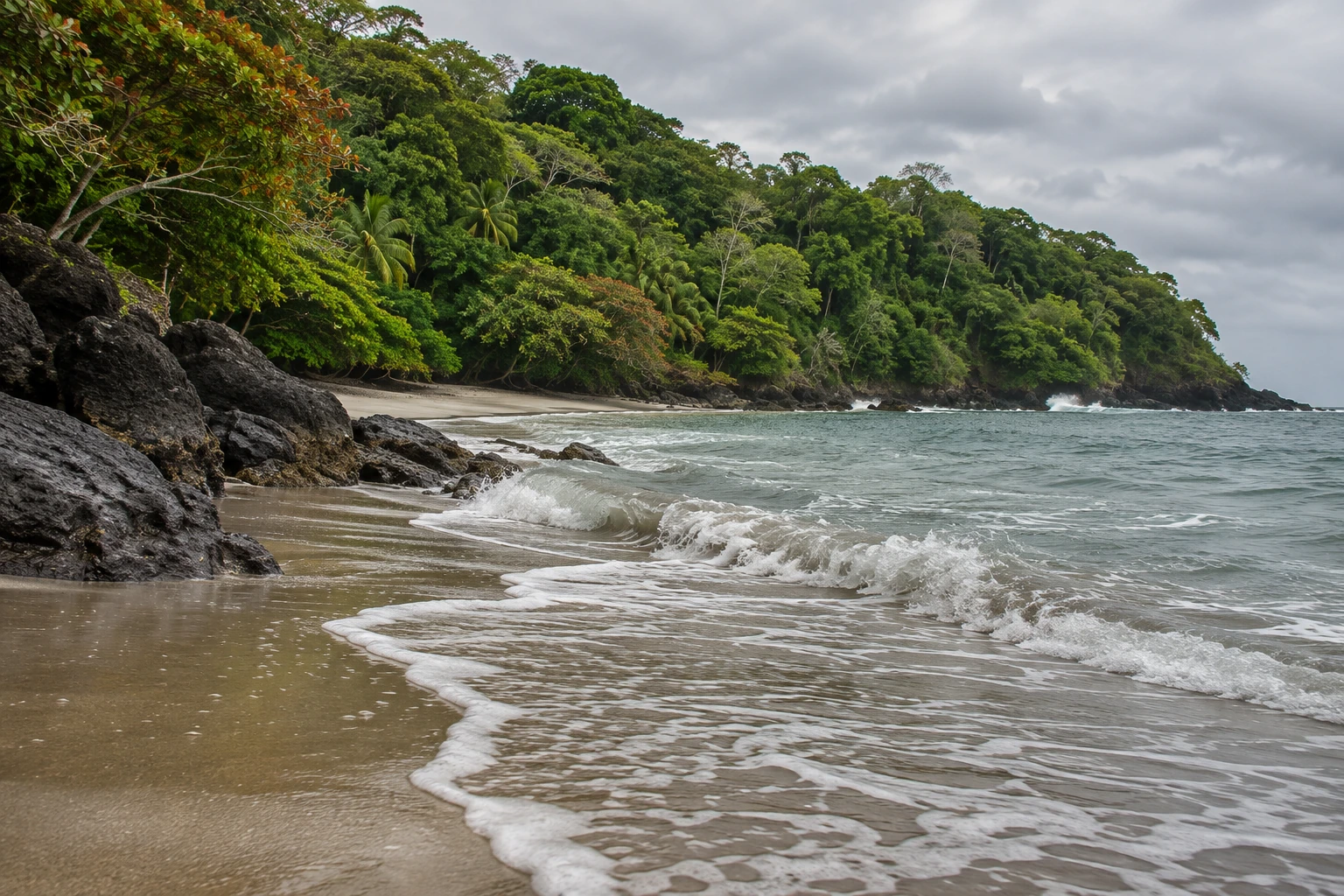
Coast and inland in Belize
Belize’s official regional story reaches beyond a reef-only image to smaller places and local cultural experiences. Decide how much time belongs inland and how much by water. A boat movement, a road journey and a possible air sector each need to be visible in the plan. The two settings should add depth without creating a constant cycle of packing.
Read the Costa Rica and Belize portraits as separate beginnings. Either can support a complete holiday. Combining countries is most rewarding when the reason for doing so is stronger than the attraction of adding another name to the itinerary.
Costa Rica’s Northern Plains bring La Fortuna, Arenal, hot springs and Sarapiquí rivers into an interior enquiry. That is a different base from the coast. Begin with the activities the party wants and the kind of accommodation that supports them, then ask how the onward road day fits. A compact country outline can still conceal a substantial change in the experience and the practical demands of the day.
The Caribbean regional account separates northern waterways around Tortuguero and Barra del Colorado from southern coastal settings around Cahuita, Puerto Viejo and Gandoca-Manzanillo. A river-based interest and a cultural coast stay can require different plans within the same broad region. Choose which one is central before using a climate label or hotel photograph to settle the itinerary.
In the South Pacific, Osa, Golfo Dulce, Sierpe-Térraba and Marino Ballena supply different ecological settings. Sierpe can be a boat-access base for particular excursions. Ask how the chosen activity is reached and what the current operator requires. These names enrich the possibilities, but the programme should still select a manageable number of experiences with enough time between them.
Belize’s San Ignacio supplies an inland counterpoint through Cayo, the Macal River, market food and access towards western Maya sites and caves. A traveller interested in that chapter needs more than a night inserted between coastal transfers. Choose the visits that suit the party and confirm their actual arrangements. The base should make those days coherent while allowing time to enjoy the town’s own setting.
Hopkins and Placencia are different coastal choices, with Garifuna and Kriol contexts respectively in the tourism accounts. A planning conversation should preserve those distinctions rather than reduce both to beach accommodation. Decide what draws you to the community and surrounding activities, then ask which stay supports that purpose. The value of the coast lies partly in the particular place, not only in the view from a room.
What changes between two twelve-night journeys?
Consider a twelve-night city journey with six nights in Rio and six in Buenos Aires. These are editorial stay allocations, before the agency chooses the actual international connections. Rio’s mountain, forest and coast relationship supplies one setting; Buenos Aires brings a different civic and cultural landscape, beginning around Plaza de Mayo. Two cities hold the trip together, with one international movement between them. The visitor can develop a particular interest in each place rather than spend every morning learning the next departure.
Now compare twelve nights in Peru: four in Cusco, four in a Sacred Valley base and four in Arequipa. The total is unchanged, but the route has three accommodation bases within one country. The subject changes too. Cusco’s layered city, the valley’s villages and archaeological places, and Arequipa’s sillar architecture offer three related cultural chapters. Their approaches and physical demands need their own sequence; a national label does not make them one uniform environment.
Neither allocation is a booking offer. They make a choice visible before hotels and connections fix it. The two-city version introduces an international handoff but fewer bases. The Peru version keeps one country while changing base more often. Counting passports or countries would miss that distinction. Counting nights, moves and the intended experiences reveals it immediately.
In the Rio and Buenos Aires version, a specialist interest could give the two stays a clear relationship: public space and urban history, for example. The Carioca landscape and Plaza de Mayo would then begin two different enquiries into how a city presents itself. Six nights at each base leave room to follow that interest beyond the initial introduction. A traveller seeking a wider range of environments might choose another allocation instead; these twelve nights are principally a conversation between cities.
In the Peru version, the change of material could become the thread: Cusco’s masonry, the valley’s terraces and towns, then Arequipa’s volcanic sillar. Adding the coastal geoglyphs of Nasca and Palpa would introduce another distinct setting. It would also require a revised allocation, not simply a new line added to the same twelve nights. The extra chapter should be chosen for its own interest and given time taken honestly from somewhere else.
Put both routes into the same working format: nights at each base, journeys between them and the services included. Then ask each local team to check its own entries. A coordinating contact can keep the shared itinerary current, while the people who meet travellers at each gateway confirm the details they will actually deliver.
Humboldt and Bonpland’s plant-geography diagram offers a way to understand the choice. It showed relationships across different conditions rather than making the mountain one undifferentiated surface. These two twelve-night routes likewise have different internal structures. The useful decision is which structure serves the traveller’s curiosity, with enough time for the individual places to retain their character.
What can one coordinating contact do for several countries?
One coordinating contact can simplify communication and help hold the journey together. It does not mean that every service is delivered by a company-owned team in every country. Ask who contracts the accommodation and transport, who meets the traveller locally and who coordinates a change across the next arrival. The agency and the traveller should understand their respective contacts.
An international arrival can run late while the next part of the journey is already in motion. Ada Tours’ missed-connection example asks who makes the decision and informs everyone who needs to act. Ask how your particular sequence would be handled, including any separately booked flights and anyone meeting the group at the next stop.
Compare the room types, guiding languages, private or shared transport, admissions and optional activities before comparing totals. Ask which lines will change if you move a date or lose a night. The Brazil DMC guide shows how different operators describe their services and what an agency can ask each one to confirm.
Before booking, read the route once without its destination photographs. Check the nights, the movements and the purpose of each stay. Then put the images back and ask whether the practical sequence supports the journey they suggested. This final reading often reveals a stop that needs more time or an extra movement that contributes little to the holiday.
The ascent survives in two diaries. One route held different observations and different emphases, while the instrument carrier remained part of the party that made the ascent possible. A modern itinerary also has several perspectives to accommodate: the traveller’s interests, each person’s energy and the local knowledge needed to join the places. Plan for those differences explicitly. A regional journey becomes coherent when its environments and the people moving through them are given proper attention.
What else should you consider?
Should a first Latin America trip include several countries?
Only when each country serves a clear purpose and the travel sequence leaves useful destination time. One country explored in depth can be a complete journey.
What is an anchor experience?
It is the main reason for travelling: a landscape, cultural interest, family commitment or event. Use it to choose dates and decide what other stops can fit.
Does one DMC contact mean company-owned teams everywhere?
No. Ask about the contracting entity, local operating partners and arrival contacts in each country. Coordination and ownership are different facts.
What should I check before an Andean visit?
Check the current official visitor arrangements for the specific site and dates. Seek individual health advice about the route, altitude and planned activities.
Can Costa Rica use one national climate rule?
Its Pacific and Caribbean rainfall patterns differ. Choose the actual coast, forest area and activity before using seasonal advice.
How should transfer days be counted?
Count the entire room-to-room movement, including waiting, processing and onward transport. Avoid placing essential activities on a day whose arrival remains uncertain.
Sources and further reading
Reviewed 18 November 2026
- One DMC for a Multi-Country South America Trip
- Who Owns a Missed Connection on a South America Trip?
- Alexander von Humboldt und Carlos Montúfar als Reisegefährten: ein Vergleich ihrer Tagebücher zum Chimborazo-Aufstieg
- TagebuchVIIbb/c der Amerikanischen Reise
- Humboldt and Bonpland's Géographie des plantes Équinoxiales
- Frederic Edwin Church's Mount Chimborazo, Ecuador
- Argentina tourism board
- Mendoza
- Historical Centre of the City of Arequipa
- Hopkins
- Ruta Nacional 3: Five Must-See Destinations
- Chiloé
- San Pedro de Atacama
- UNESCO Iguaçu
- Tourist Attractions in Argentina
- Patrimonio cultural / Parque Nacional Iguazú
- The Sacred Valley
- Lines and Geoglyphs of Nasca and Palpa
- Chile tourism board Torres del Paine
- Valparaíso
- Costa Rica tourism board climate
- Costa Rica travel trade
- Belize tourism board regional article
- Northern Plains
- Caribbean
- South Pacific
- San Ignacio
- Placencia