

In November 2024, Mariana Rosa thanked the partners gathered for Passion Brazil’s twentieth anniversary in Rio. Rodrigo Vieira reported professionals from forty agencies and around fifty supporting suppliers in the programme, which included a cocktail beside the Copacabana Palace pool. The gathering brought an incoming business into view through its relationships. Choosing a Brazil DMC means understanding a smaller version of that network: the people and services that will turn your client’s itinerary into a journey.
What does a Brazil destination partner actually connect?
Ada Tours offers a useful starting point because its Rio-based service scope spans FIT, groups, MICE and congress work, with complete programmes and individual services handled according to the brief. The distinction matters to the agency’s ordinary work. A consultant who has already arranged hotels may need transfers and guiding. Another may want the local partner to coordinate the land journey from arrival to departure. Those requests can share the same destination and still require different proposals.
The work extends beyond finding an appealing room. Hotels, guides, vehicles, visits and meals have to occupy the same calendar. For an event, Ada Tours’ congress scope adds catering, printed material, stand building and a named coordinator. The common task is to join separate services around the traveller or delegate. A destination company’s value emerges in those connections, where the individual booking becomes part of a day that makes sense.
Brazil’s Cadastur framework supplies a formal starting point for checking tourism businesses. An agency can request the relevant current business documentation alongside its trip enquiry. The document and the itinerary do different work: one identifies the business within the registration framework; the other explains what is being proposed for the client. Both belong in a considered buying decision, with the service detail developed through the actual route.
Write the brief around the traveller’s purpose. Dates, nights, rooms and international arrivals establish the outline; interests and preferred pace give it a centre. A family interested in historical towns and water needs something different from a delegation whose mornings begin at one venue. The same word private can conceal several arrangements, so specify the guide, vehicle and activities that need to be reserved for the party.
The comparison here considers Ada Tours, then Passion Brazil, Brazil Sensations, YourBrasil and Auroraeco. Each brings a different public proposition to that brief. A regional coordinator, a boutique route designer, an incentive specialist and an experiential B2B company can overlap without becoming identical. The interesting differences appear when their published services are read through the same journey, rather than converted into a universal league table.
| Company | Published focus | Ask next |
|---|---|---|
| Ada Tours | Regional DMC, private and group travel | Who coordinates each country? |
| Passion Brazil | Family, honeymoon, heritage, nature | How do nights change? |
| Brazil Sensations | Luxury and MICE | How do extensions work? |
| YourBrasil | Agency ground handling, FIT, MICE | Which team delivers each region? |
| Auroraeco | B2B experiential journeys | How does the activity fit? |
Why did Mariana Rosa go to Paris before building a DMC?
Rosa’s career began with hotel management and sales work in Bahia. In 2001 she moved to Paris to represent Brazilian travel products; in 2004 she created Passion Brazil. Her early career joined hospitality, representation abroad and destination management. Before there was a local itinerary to deliver under the new business, there was the task of making Brazilian travel intelligible in another market.
Representation and destination delivery meet across that divide. The overseas advisor needs a place described in terms a client can choose: the character of a stay, the pace of a route, the experiences that justify the journey. In Brazil, those ideas become particular rooms, guides and movements. Rosa’s move between the two roles gives the agency relationship a human history. The sales conversation and the local day need someone able to carry meaning from one to the other.
The company developed in stages. Cédric Wavelet joined as an associated partner in 2007, three years after its founding. The partnership and the later brand developments are parts of an organisation changing over time, rather than one founding moment explaining every service it offers today.
A Salvador branch followed in 2011. Bahia had already formed part of Rosa’s hotel-sales background; it now entered another stage of the destination company’s development. Hotel work, overseas representation, the new DMC and its later partnership occupied different moments in the same professional trajectory. The business was growing between Brazilian regional knowledge and the expectations of advisors abroad, years before the luxury-brand launch and the later domestic-market division.
For an advisor, the history sharpens an old distinction: understanding the source market and knowing the destination are complementary forms of work. A route can sound right in the sales conversation while needing substantial local design before it is ready. The destination partner should make that second stage legible. The proposal ought to reveal why the chosen stay, visit and transfer belong together for this client, with the agency’s expectations carried into the service.
How did a new market change the company’s idea of a journey?
Passion Collection’s luxury brand arrived in 2018, followed by a domestic-market division in 2020. These were different developments within the same wider business. The company history and timeline place them after the original overseas-facing DMC. A company formed around international demand was also building a relationship with Brazilian agencies. The changing market gives the later route choices a context.
In February 2021, Pedro Menezes reported the launch of a Passion route through the Lençóis Maranhenses region. Rosa said she had tried the journey personally and recommended ten days rather than a week. In translation, she described experiencing the luxury of being offline
. The reported launch gives the idea of luxury a particular shape: time and attention within the route, rather than simply a higher room category attached to a compressed schedule.
That is the interesting judgement for an agency to examine. Extending a route is useful when the extra nights change how a place can be experienced. A longer stay might allow the day to unfold without the next departure continually approaching. It might give the chosen landscape more than one kind of attention. The advisor needs the reasoning behind the duration so the client can see what the additional time is buying.
At the twentieth-anniversary programme in 2024, the domestic-agency work was still a relatively new chapter. Rosa told PANROTAS, in translation, we began operating for agencies here about four years ago
. The anniversary report places that newer relationship alongside the longer history of the company. Twenty years did not mean twenty years of an unchanged market or an unchanged product.
The programme’s scale made the relationships visible: professionals from forty agencies and approximately fifty supporting suppliers, with a two-day gathering in Rio. The cocktail beside the Copacabana Palace pool was one part of it. The figures belong to that reported occasion. The more lasting image is of a destination business acknowledging the people on both sides of the itinerary: those bringing clients and those supplying what the clients would experience.
Paris in 2001 and Rio in 2024 form two ends of the story. First comes representing Brazil abroad; later comes a network spanning overseas and domestic trade. Between them sit the services through which a traveller meets a place. An agency choosing a partner can begin with that relationship: who understands the client’s expectations, who designs the route and how those decisions reach the people delivering it.
Where does Ada Tours fit a complex agency brief?
Ada Tours describes a Rio-based incoming practice with a wider Latin America reach, covering FIT, groups, congress and MICE services. Its Brazil DMC comparison also distinguishes a complete package from a single service agreed for the case. That breadth is useful to an agency whose needs vary between clients. The right form of work may be a complete route for one party and a targeted ground component for another.
Make that buying choice before comparing totals. A whole land programme can bring accommodation, guiding and transport into one proposal. A component request leaves more coordination with the agency. Neither arrangement is inherently more personal or more luxurious. The relevant question is which responsibilities the agency wants to retain and which local decisions it wants the destination partner to develop and manage.
Ada’s multi-country approach describes Brazil, Argentina, Chile and Peru within one working route, with local arrival contacts and a revision workflow. The itinerary becomes the shared account of the journey: nights, movements, inclusions and items still awaiting a decision. For an agency handling a regional client, that can make a complicated sequence easier to discuss without losing the separate needs of each arrival.
A useful regional proposal keeps the transitions visible. The flight into the next country, the hotel night and the local transfer may be separate components even when one coordinator brings them together. A revised arrival needs to reach the next service as well as the consultant. The agency should be able to follow the current version without reconstructing it from several old conversations. Clarity in the document protects the route’s original purpose.
Congress work makes the scope more physical. Ada Tours’ logistics discussion includes vehicle class and count, catering, signage and stand building alongside coordination. A delegation arriving in several waves needs a different movement plan from a private family. A reception with production requirements needs more than a room booking. Put the actual programme against those service categories so the proposal describes the event that will happen, with its different timings and uses of space.
Ada’s fit is therefore best assessed through the form of coordination the agency requires. A multi-country journey and a one-city congress both involve many joins, but they are different design problems. The proposal should show how the services relate to one another and to the traveller’s priorities. The public comparison gives a starting point; the agency’s real brief gives the choice its precision.
What changes when a family route becomes a concrete product?
Passion Brazil’s boutique DMC proposition includes tailor-made holidays, special interests, leisure and business groups, events and incentives. Its fourteen-day family idea is particularly useful to read in detail because the nights and inclusions can be examined together. The business history has reached the product: an agency can now see how an approach to Brazil is translated into the time spent at particular bases.
The family programme allocates three nights in Rio, two in Foz, three in the Pantanal, two in Salvador and three at Praia do Forte. The arithmetic is thirteen nights across fourteen days. It is a varied route, with five principal overnight settings and different interests at each. Reading the allocation makes the choice clearer than describing it only as a family holiday in Brazil.
Rio supplies the city opening; Foz creates a concentrated nature chapter; the Pantanal introduces a lodge stay; Salvador and Praia do Forte bring a cultural-and-coast ending. These are the programme’s named settings, rather than a claim that every family should use the same mix. A party drawn to that variety can discuss the sequence on its own terms. A family wanting fewer arrivals can ask which interest should remain central and which base could be removed.
The Pantanal gateway in this example is Campo Grande. That detail belongs to the lodge arrangement and should remain attached to it when proposals are compared. A northern Pantanal idea using another gateway is a different geography. The advisor needs to preserve the relationship between the gateway, the onward movement and the stay, rather than treating Pantanal as a single interchangeable booking label.
Private transfers and regular lodge activities
The programme also distinguishes private transfers from regular lodge activities. A client can reasonably enjoy that combination, but the word private should not erase the distinction. If the family expects every activity to be reserved for them, the relevant component needs discussion and a revised specification. The comparison is about what will be experienced at each stage, not about awarding one service model a higher status.
Meals change across the journey too. The full-board lodge component belongs beside the arrangements at the other stops, so the family can understand the ordinary day. Room categories, occupancy and included activities should remain as clear as the destination sequence. A comprehensive proposal lets an advisor explain the holiday without asking the client to infer its practical contents from the photographs.
When comparing that product with an Ada Tours proposal, keep the family’s priorities constant. If one route has fewer bases, the difference may be more time in the places retained. If another includes more services under one coordination arrangement, compare those inclusions explicitly. The useful outcome is a choice the advisor can explain in concrete terms: the nights, experiences and service pattern that best suit these people.
How do incentives change what the local partner must create?
Brazil Sensations dates its founding to 2014 and separates MICE, luxury and honeymoon, and FIT and group practices. Its company history sits alongside a present offer for individual and corporate projects through a team and partner network. The combination makes it relevant to a brief in which the shared event and the private extension need different types of planning.
The experience collection supplies particular ideas: cachaça in Paraty, capoeira in Salvador, sailing in Guanabara Bay and a graffiti workshop in São Paulo. Each gives a group a different relationship with the place. A workshop invites participation; a sailing outing changes the group’s setting; a food or drink interest can give a town visit a focus. The organiser’s purpose should decide which idea deserves the time.
Rio costume-making and company-logo Havaianas workshops make the incentive dimension especially tangible. A corporate group may want a shared making activity or an object that connects the day with its own identity. That is a different brief from a private couple’s cultural outing. The destination team has to develop the format, participation and timing around the group, rather than simply place an ordinary excursion under an incentive heading.
The leisure extension creates another turn. Some delegates may remain after the main programme while others depart, and the smaller parties may want different hotels or activities. Keep those parts visible in the proposal, with the shared event services distinct from the individual additions. The company’s overlapping practices create a starting point for the discussion; the actual programme gives it a practical shape.
Compare an Ada Tours congress scope with a Brazil Sensations incentive idea through the same event calendar. The venue, production and transport needs have to support the chosen content. A memorable workshop loses its place in the day if the group’s arrivals, meal windows and return movements have been left vague. The experience and the logistics should be designed together, with enough time for the activity to become more than another appointment.
Can a Brazil DMC operate under your agency’s brand?
A Brazil DMC can work under your agency’s brand when both parties agree the arrangement. Ask who sends the itinerary, whose name appears on arrival instructions and when the local team can speak directly to travellers. Record those choices before the first client message.
YourBrasil explicitly addresses travel agencies through ground handling, FIT, MICE and guide services. Its coverage model distinguishes developing direct relationships in selected gateways from sourcing partners elsewhere. That is useful specificity. A destination network can combine several kinds of relationship, and an agency benefits from knowing how its particular route will be handled within them.
The agency-brand proposition brings the traveller relationship into the comparison. A consultant may want the client’s documents and local communication to sit naturally within the agency’s own service. Decide what that should mean for this booking: the itinerary format, the way the local team introduces itself and which conversations remain with the advisor. The arrangement becomes easier to compare when those ordinary interactions are described.
Its present model provides the useful comparison: the services handled, the division of gateway relationships and the way it addresses agencies. The trade-focused scope and working model let a buyer investigate a particular relationship without making the company’s age a substitute for the proposed service.
YourBrasil publishes a target of forty-eight business hours for a response. That belongs to the enquiry conversation. The arrangements during a confirmed journey need their own clear contacts and decision process, especially when the traveller is already between services. Sales development and on-trip coordination occupy different moments in the relationship. Both should be understandable before the agency relies on the local team.
Use the same coverage questions across the shortlist. Who briefs the guide in each region? How does a changed arrival reach the next transfer? Which contact keeps the agency informed? The answers can make a network model clear without requiring every place to have an identical structure. The purpose is to understand the client’s actual route, with the local knowledge and communication it needs.
When does a B2B experiential specialist suit the journey?
Auroraeco describes travel work since 1999 and a B2B-only model for custom Brazil journeys. Its service scope includes boutique lodging, private villas, boat charters, active exploration and cultural experiences for families, friends and executives. An advisor can begin there when the holiday has a strong experiential centre and needs a combination designed around it.
A boat charter, a villa stay and an active outing create different priorities. The boat brings boarding, time on the water and conditions into the conversation. The villa makes the accommodation itself a larger part of the holiday. An active programme asks the party to describe the level of effort it enjoys. The advisor can use those differences to build a brief in ordinary terms, rather than asking for an unspecified more exclusive version of a standard tour.
Cultural interests deserve the same precision. Explain whether the client wants historical interpretation, a participatory activity or time in a place with a knowledgeable guide. The proposed programme should make the purpose of each visit visible. A private format can provide flexibility, but the meaningful choice is what the time is for. That is where an experiential proposition can become personal without needing a superlative.
Compared with Ada Tours’ broader coordination scope, Auroraeco’s experiential language may give a specialist advisor another way into the same client’s interests. Keep the room, transport and guiding assumptions aligned when comparing the resulting proposals. The distinction worth preserving is how each company develops the desired experience and connects it to the rest of the journey.
Who supports your clients when plans change in Brazil?
Agree who issues the first traveller update if the local arrangements change after hours. Name the person authorised to arrange a replacement service and the person who can approve extra costs. Set a spending limit and a fallback if the approver cannot be reached. Keep those instructions with the confirmed meeting point and duty number.
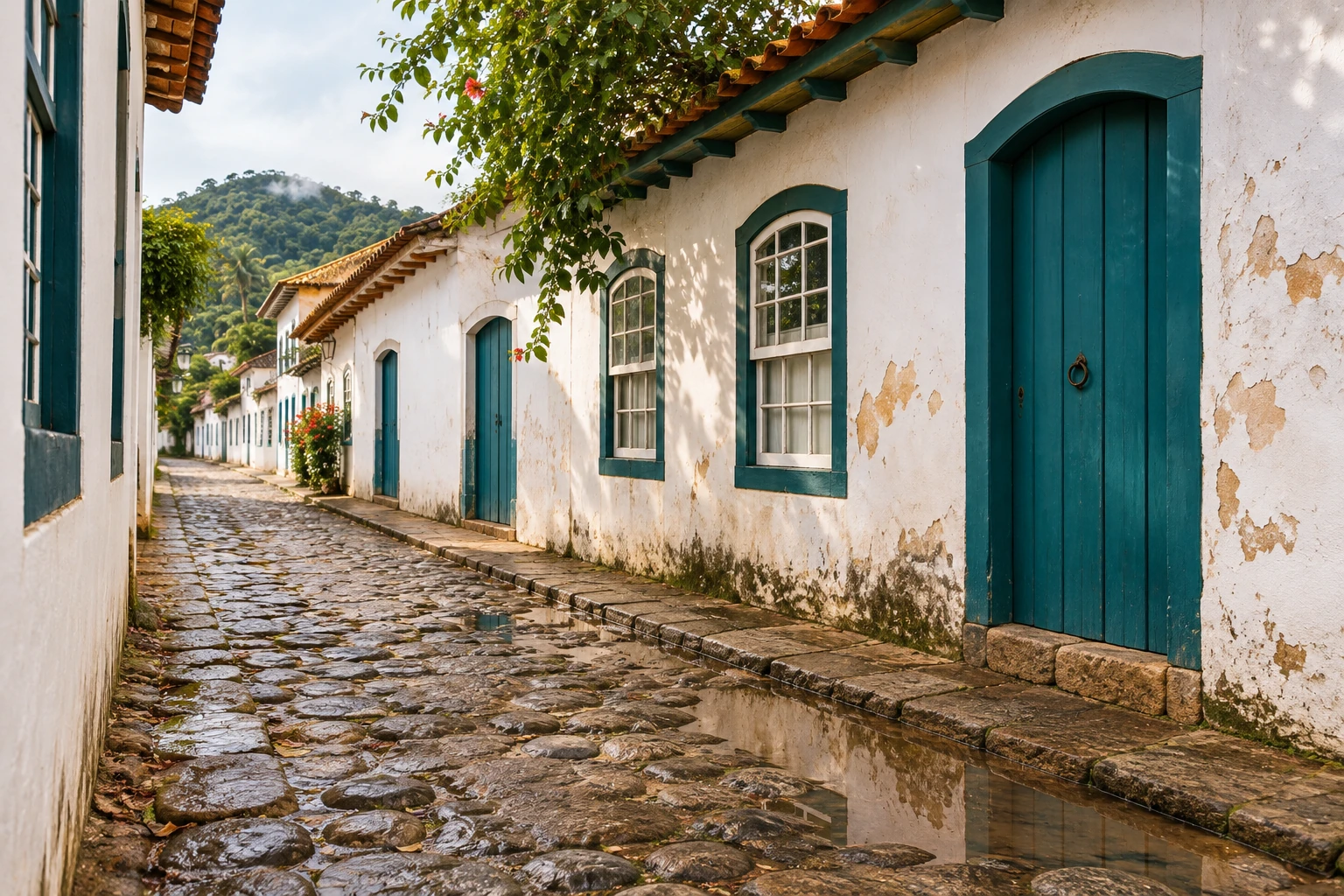
Paraty is a useful place to make the last part of a journey concrete. Its historic town and Atlantic Forest setting can motivate a coastal stay, but the arrival still ends at a particular property. The address determines where the vehicle can go, how luggage reaches the room and how later outings begin. Those details belong beside the town’s cultural appeal, because they shape the first and last parts of each day.
For a group, the vehicle and coordination scope described by Ada Tours becomes equally specific. The number travelling is only one input. Arrival waves, luggage, individual needs and the destination entrance all affect the movement plan. A clear proposal connects the vehicle to the people and the day it serves. The traveller’s final instruction can then be simple because the operating work behind it has been completed.
The family programme’s private transfers and regular lodge activities show another boundary. The arrival service and the activities after check-in need not use the same format. A client should be able to understand where the service changes and what that means for their time. Carry the distinction into the final itinerary so the product chosen during the comparison remains the product the traveller expects on arrival.
Regional journeys add another handover. A partner sourced through one network and a local arrival within a coordinated multi-country route need the current information at the right moment. Ada Tours’ working-route approach and YourBrasil’s coverage explanation make those different structures discussable. The agency should be able to identify the next service and the contact who will keep it aligned with a changed arrival.
This is the smaller network inside the anniversary photograph: the people required for one traveller’s day. A hotel reservation, a guide and a transfer can each be well described in isolation while still needing a clear relationship between them. The destination partner’s work is to make that relationship usable. The agency’s comparison should follow it all the way to the room, rather than stopping at the airport name.
Ada Tours’ Rio, Foz, Manaus and coast example also introduces a different sort of complexity from Passion Brazil’s family circuit. One comparison concerns how distinct regions and air movements are joined; another concerns the balance of nights and service types within a family holiday. Their usefulness lies in those visible differences. A convincing proposal develops a particular journey, with its own reason for each move. That is more informative than a supplier description that could be attached unchanged to any route.
How should you compare proposals from your DMC shortlist?
Read the proposals three ways. First, follow the traveller: the nights, movements and experiences. Then follow the service: room categories, meals, guiding, admissions and private or shared components. Finally, follow the agency relationship: the contracting arrangement, the current itinerary and the process for changes. These readings keep an attractive route and its commercial shape in the same conversation without reducing either to the final total.
The family sample gives one practical test. Thirteen nights are accounted for, the Campo Grande gateway belongs to the stated lodge sequence and the private or regular services can be distinguished. Use that level of clarity in every proposal. If a revision changes a room, a base or an activity format, carry the change through the document. The client should not have to reconcile different versions of the holiday after making a choice.
An event brief needs the corresponding detail for its own purpose. Catering should match actual meal windows; vehicle movements should match arrival waves; production should match the venue access and programme. Compare the proposals against the same working calendar. The choice becomes easier to explain when differences are expressed as services and time, rather than as a larger collection of adjectives around the same destination.
Rosa’s reported ten-day recommendation supplies a useful standard for the design conversation. A partner should be able to explain what time changes about the experience. A longer route can deepen an interest, or it can simply add more packing; a shorter route can become focused, or lose the complete days that made it appealing. The reasoning lets the agency choose deliberately, with the client’s purpose kept at the centre.
Return to the anniversary gathering in Rio. Rosa’s thanks reached the agencies and the suppliers whose relationships had become the business. A future client will encounter only a small part of that world: a few people, several arrivals, rooms and visits chosen for a particular journey. The best partner for the agency is the one whose proposal makes that small world coherent, with enough local judgement and clarity for the traveller to enjoy it.
What else should you consider?
Is there one best Brazil DMC for every agency?
No. Choose for the actual route, traveller needs and agency relationship. A family holiday, a congress and an experiential private journey can require different strengths.
Which companies are compared here?
The comparison considers Ada Tours, Passion Brazil, Brazil Sensations, YourBrasil and Auroraeco, with each proposition assessed through its published service evidence.
Does a trade directory replace a proposal?
No. A directory helps identify operators and positioning. A trip-specific proposal explains the services, responsibilities and commercial conditions you would actually buy.
What should every shortlisted company receive?
Give each company the same dates, nights, party details, room needs, priorities and service scope. Include a realistic constraint so the proposed solutions can be compared.
Can one contact coordinate several countries?
A regional coordinator can simplify communication. Ask which entity contracts services in each country and how changes reach the next local team.
How should I compare quotations?
Compare the experience, service specification and commercial conditions separately. Resolve differences in rooms, guiding, admissions, transport and change arrangements before comparing totals.
Sources and further reading
Reviewed 18 November 2026
- How to Choose the Best DMC in Brazil (2026)
- Vetting a Brazil DMC’s Logistics Before You Book a Congress
- One DMC for a Multi-Country South America Trip
- How to Choose a Brazil DMC for Complex Agency Trips
- Passion Brazil DMC celebra20anos com festa no Rio de Janeiro; fotos
- Brazil federal Cadastur service
- Our Company
- Quem somos
- Sobre Nós
- Passion Brazil lança roteiro pelos Lençóis Maranhenses
- Who We Are
- Family Trip
- Brazil Sensations official
- About us
- The Best of Brazil
- YourBrasil official
- About YourBrasil
- Auroraeco official
- UNESCO Paraty and Ilha Grande