
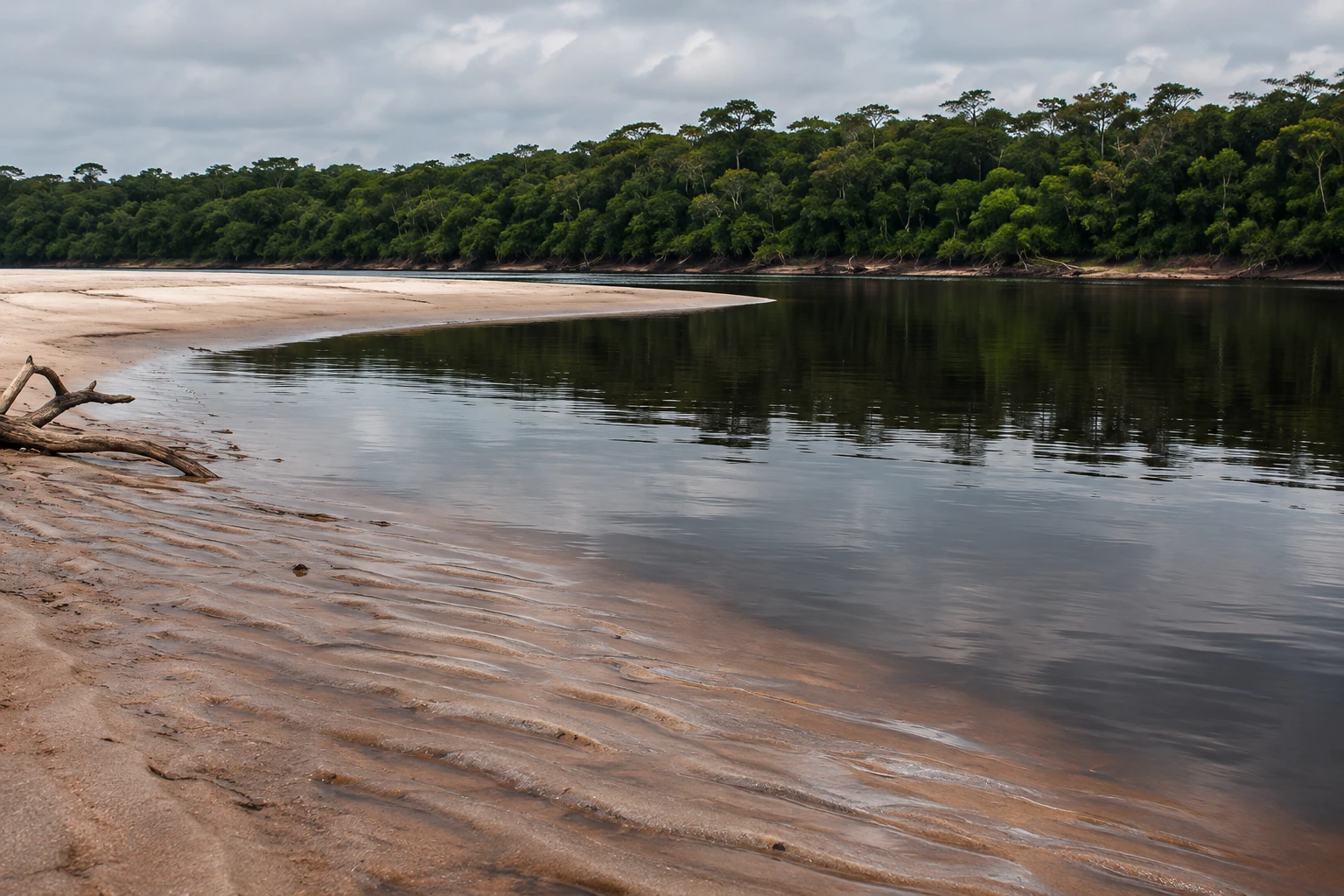
Wolfgang Junk watched an honorary-degree ceremony by video; his colleague Jochen Schöngart received the title in person. In its October 2026 account, INPA traced Junk’s Amazon research back to 1967, when he studied floodplain aquatic plants under Harald Sioli. The long career asks a deceptively practical question of a traveller’s calendar: what happens when land becomes water, then land again? Choose the Brazil season through the region and the experience, rather than a single national best month.
What did Wolfgang Junk learn to look at differently?
Floodplain plants put alternation at the centre of the story. INPA’s account of Junk’s work connects his early Amazon research with the flood-pulse concept published in 1989. The subject is a landscape that changes its condition, rather than scenery remaining fixed while rain passes over it. That is a useful distinction for travel: a river journey and a land-based programme may be responding to different phases of the same environment.
Junk’s later work extended into wetlands research at UFMT and the national inventory of 2024. The career that began with floodplain aquatic plants kept returning to changing environments. That long attention gives the travel question a sharper focus: the month alone may be an incomplete description of what the landscape is doing. The useful answer also needs the particular place and the way it is reached.
Embrapa’s explanation of the Pantanal gives the mechanism a geographical scale. The wetland’s low gradients can allow water from the headwaters to take four months or more to cross it. The institution also distinguishes eleven subregions with different soils, vegetation and climate. A national calendar is already too broad; even one wetland can contain several different seasonal situations. The local activity and access route therefore belong in the first question.
UNESP’s account of the flood wave explains the north-to-south delay. Rain and the resulting water movement do not reach every part of the Pantanal at once. Farther south, flooding can arrive during locally drier weather. The apparent contradiction is physically meaningful. A traveller looking only at the rainfall expected over a lodge could miss the water arriving from elsewhere, and the effect that water has on the programme.
This does not mean that rain is irrelevant. It means that rainfall and the movement of water are related measurements with different locations and times. Ask where the programme sits in that system. The answer should identify the gateway, the way you reach the stay and the activities planned there. Then a seasonal explanation can become a decision about a particular holiday, rather than a rule repeated across the country.
The story continues in a current scientific explanation. In Embrapa’s May 2026 flood assessment, Carlos Padovani described the effects of rainfall persistence, spatial synchronisation and earlier deficits. Partial recovery in 2025 and 2026 did not erase the longer deficit described in the report. Water arriving in one period can be used in replenishing what earlier periods left depleted. The seasonal pattern has a memory.
Padovani explains, in translation, that flood generation depends not only on the total amount of rainfall
. Persistence, distribution and earlier conditions help determine what follows the rain. The total alone cannot tell the whole story.
Padovani’s explanation is more useful than treating an average year as a guarantee. A brochure can describe the normal appeal of a season while the particular year follows a different course. The Embrapa assessment is dated, and its April Ladário observation is not a reading for your departure day. Read it as evidence of the processes that make current local checks necessary, rather than as a forecast that can remain unchanged on a travel page.
The two scientific episodes complement one another. Junk’s long research history helps explain the alternation between flooded and exposed environments; Padovani’s assessment shows why one year’s flood cannot be inferred from a simple national month label. Our travel inference is to choose the experience and its exact geography first. Only then can the calendar answer the question the holiday is actually asking.
Why does a national best month tell you so little?
The city comparisons below use WMO-published INMET monthly normals for 1961 to 1990. This older reference period reveals contrasts between places; it is not a 2026 forecast. Our suggested travel windows are interpretations of those city data. They do not describe every beach in a state, a lodge’s river level or the weather on an individual departure.
| Place and interest | Consider | Trade-off |
|---|---|---|
| Rio: walking and culture | May to August | Milder, relatively lower rain; less summer heat |
| Manaus: lower city rainfall | July to September | Hotter afternoons; river levels need separate checks |
| Recife: beach-led stay | October to December | Relatively drier city pattern, not a guarantee |
| Florianópolis: warmer beach weather | December to March | Warmer and wetter; winter is substantially cooler |
| Northern Pantanal: photographic safari | June to September | Published programme window; sightings remain uncertain |
| Amolar: flood-led river journey | December to March | Published flooding example, not every cruise’s operating calendar |
Brazil contains different climate regions, so a national season can conceal the conditions that matter to your holiday. Visit Brasil’s regional climate guidance distinguishes the humid equatorial North, the seasonal Central-West and colder southern winters. A date that suits one destination is an invitation to ask about another, rather than a reason to assume the same weather everywhere.
Start with the purpose you would be most disappointed to lose. If it is wildlife, let the specific wildlife programme guide the date discussion. If it is a coastal rest after a fixed conference, accept the date and choose the coastal place accordingly. The same two weeks can produce a satisfying trip in several forms, provided the route responds to the season instead of treating every region as permanently interchangeable.
Do not confuse climate, the current outlook and current operating conditions. Climate describes a longer pattern; the outlook concerns an approaching period; the lodge or excursion operator must explain how the actual access and programme will work. Padovani’s hydrological account shows why those layers can diverge. Keeping them separate lets an agency be precise without replacing uncertainty with a confident but incomplete answer.
How should you think about Rio and the southeastern coast?
For a Rio stay centred on walking, landscape and culture, May to August is a useful starting window. In the WMO city series, average daily maxima are about 25 to 26°C in those months, compared with around 29 to 30°C in December to March. July and August have monthly rainfall around 56 and 51 mm; December has 169 mm. The contrast favours a different daily rhythm, rather than promising uninterrupted sunshine.
Someone seeking summer warmth may prefer December to March and accept the wetter pattern. A city day can then leave space for rest between its outdoor interests. The best choice depends on whether the beach is the main experience or the setting around a cultural holiday. These figures describe Rio’s published city series. They should not be copied across to Paraty as though two places on a route share the same local measurements.
Imagine two four-night Rio stays. One traveller wants long walks and several cultural visits; another hopes for warm mornings beside the sea and shorter outings. The first can use the milder window to begin an enquiry. The second can begin with summer and plan the day around heat and changing conditions. The same city supports both holidays, but they should not be sold through the same promise.
Read Rio as an outdoor city with cultural alternatives, then build a flexible sequence. Its UNESCO-listed landscape includes mountain, forest, designed parks and coastline. A programme that depends on a particular view at a particular hour is more fragile than one that can exchange outdoor and indoor interests between days. Leave enough time for the city’s different settings to coexist.
Summer and winter are useful starting words, but they are not a complete itinerary. Tell the planner whether the priority is beach time, landscape outings, cultural visits or an event. A traveller who wants to spend most of the day outside needs a different rhythm from someone dividing time between museums, restaurants and short walks. Comfort also depends on the individual’s tolerance for heat and the amount of rest built into the day.
Ada Tours’ Rio seasonal guide offers a first-party planning perspective on the city and its calendar. Use it to identify questions, then check the actual event and accommodation dates separately. A general description of a busy period cannot establish availability at a chosen hotel. Ask the hotel for the conditions attached to your own booking dates.
For Paraty and the wider coast, choose the stay and possible activities together. The Paraty and Ilha Grande inscription joins historic town and Atlantic Forest landscapes. That richness gives a coastal stay several possible centres of interest. A boat day, a history-led walk and a rest day should not all depend on the same conditions. Choose a property you would be glad to spend time in when the outdoor plan changes.
For Rio, translate seasonal preferences into the day you intend to spend. Riotur’s Ipanema account locates the beach between Arpoador and Jardim de Alah and describes its recreational setting. If the beachfront is central to the holiday, give it unhurried hours. If it is primarily the setting for a cultural city stay, choose the room and route so indoor visits and rest can complement outdoor interests when conditions change.
Santa Teresa introduces a different physical setting. Its hilltop streets, alleys and stairs are part of the district’s cultural appeal. They are also a reason to describe the actual outing and the party’s comfort rather than apply the same plan to every neighbourhood. A city programme with several distinct settings can adapt more thoughtfully than one that depends on an uninterrupted run of exposed viewpoints.
Which Pantanal season suits the journey you have in mind?
The Pantanal needs a product-level answer because changing water affects both the landscape and how you enter it. Embratur’s photographic safari example focuses on a northern Pantanal journey and a June to September window. Its Amolar river-cruise example highlights flooding from December to March. These are distinct programmes. Neither should be expanded into a promise about every lodge or every wildlife encounter across the wetland.
The UNESCO conservation area protects part of the Pantanal ecosystem. Keep that distinction in mind when reading descriptions. A lodge in the wider wetland does not automatically sit inside the inscribed property, and an account of one protected area does not tell you the road conditions at another. Ask for the specific access route and activity programme.
Embratur’s Cuiabá destination page introduces a gateway for regional programmes and highlights a broader dry-season wildlife window. The gateway is useful context, but the onward journey is where the details become decisive. Will you travel by road or boat? How much daylight is required for the arrival? Which activities are appropriate for the party’s mobility and interests?
Choose wildlife travel for the chance to spend time in a habitat, with a programme suited to the conditions. An operator can explain a seasonal pattern without guaranteeing an animal. Ask how days are organised, how much time is spent out and what happens if conditions alter the preferred activity. The quality of that answer matters more than a photograph of a sighting that occurred on another departure.
Campo Grande belongs to a different practical example: in a different route allocation, Passion Brazil’s family programme uses it for a Pantanal lodge stay. That southern approach should not be substituted into a northern route by changing only the airport name. The lodge location and access are part of the product. Comparing the two examples helps expose why Pantanal alone is not enough information to choose a date or a flight.
What should an Amazon enquiry ask about water?
For Manaus, July to September is the relatively lower-rainfall part of the published WMO city series. Monthly totals are about 88, 58 and 83 mm, compared with roughly 288 to 314 mm in February and March. The lower-rain period is also hotter: August and September average daily maxima are close to 33°C. Lower rainfall does not mean a cooler holiday.
This gives a city visitor a useful starting comparison. Someone who wants outdoor time in Manaus can consider those lower-rain months while planning for hot afternoons. A traveller primarily interested in the forest must ask another question alongside it: what does the chosen area’s water level make possible? Rain measured in the city is not a measurement of river conditions throughout the Amazon.
Start with the actual gateway and the onward journey to the forest stay. Confirm how the lodge’s programme changes with local water and which outings it can run during your dates. Then count the complete days available after arrival and before departure. A night near the airport and a night at the lodge belong to different parts of the trip.
A river-led holiday might value access and perspectives associated with water, while a programme with substantial walking may use the landscape differently. Ask the selected operator to describe the actual days for your dates. The answer should be concrete enough to imagine a morning: where it begins, how you travel and what you hope to understand. A calendar becomes useful when it reaches that scale.
An Amazon enquiry should name a gateway, lodge area and activity before asking for the best month. The North’s broad humid climate describes the regional context; river levels and the particular access sequence determine what the holiday feels like. Ask how visitors reach the lodge, which activities use water and which involve walking, and how those options change through the year.
High and lower water are meaningful in relation to a programme. The phrase rainy season alone does not tell a traveller whether a boat excursion is especially interesting, whether an arrival is straightforward or whether the preferred activity is operating. Seek an explanation of the actual place rather than assuming that a wet month has no value. Equally, do not treat a seasonal attraction as proof that every transfer will be easy.
Physical comfort is part of the seasonal choice. Share the group’s tolerance for heat, walking and boat boarding in plain terms. A beautiful setting can still be the wrong programme for a particular traveller. Once the activity pattern is understood, the operator can suggest an appropriate stay and explain what remains uncertain. The useful answer is local and specific.
Junk’s aquatic-plant research offers a way to think about the Amazon without reducing it to a generic rainforest label. The institutional account places the floodplain at the centre of his early work. A traveller can therefore ask a more precise question: how does the chosen area change between flooded and exposed phases, and which of those changes will the programme help us understand? That is an enquiry for a particular lodge or river journey.
When do Recife and Florianópolis offer different beach seasons?
Recife makes the problem with a single Brazilian beach season especially clear. In its WMO city series, October to December are relatively dry, with monthly rainfall around 66, 48 and 65 mm. June and July record about 390 and 386 mm. For a beach-led enquiry centred on Recife, October to December is therefore a practical starting window, with the usual uncertainty of an individual trip.
The city remains warm across that comparison. Average daily maxima are around 29 to 30°C in October to December, and about 27 to 29°C in June and July. The difference is not a simple warm-versus-cold choice. Rainfall makes the contrast more pronounced. A visitor with beach time as the central purpose may choose dates differently from someone making a cultural city visit with outdoor periods around it.
Recife is a named northeastern example, not the climate of the entire Northeast. Do not move these figures to Salvador, an inland destination or every resort along the coast. If the property lies elsewhere, ask for that location’s climate context. A broad regional identity can conceal a travel difference that matters greatly to the person hoping to spend most days outdoors.
Farther south, Florianópolis offers a different trade. December to March brings average daily maxima around 27 to 28°C in the published series, making it a useful starting window for warmer beach weather. Rainfall remains substantial, around 146 to 198 mm a month. The warm season is not a dry-season promise.
June to August is cooler: average daily maxima are roughly 20 to 21°C and minima about 13 to 14°C. A visitor interested in walking and sightseeing may still find a rewarding stay, but the expectation should differ from a hot tropical beach extension. Clothing, time outdoors and the role of the beach in the holiday all change with that choice.
A month can be wet in different ways. The Florianópolis series averages 94.6 mm of rainfall and nine rain days in July, with a 0.1 mm rain-day definition. Volume and frequency are separate measures. Read both when comparing how a holiday uses outdoor time: one describes the amount recorded, the other how often the daily threshold is reached. The definition also matters when comparing rain-day figures from different sources.
The contrast can alter a route without changing its duration. A traveller fixed to July could compare a milder Rio city stay with a cooler Florianópolis stay or a wetter Recife enquiry. A traveller free to choose November could begin with Recife’s relatively drier pattern. These are starting comparisons; the appeal of the particular destination still comes first. There is little value in choosing a climatic optimum for a place you do not especially want to visit.
Ada Tours’ family-travel discussion adds the question of distance and transport burden. If the coast is the restful ending to a family holiday, the selected beach should fit both the season and the journey needed to reach it. A change of region can create a different climate opportunity while introducing another arrival. The useful proposal shows both effects, so the promised rest is supported by the actual days.
What would July, January and November change in a real enquiry?
Consider a July enquiry whose main purpose is wildlife photography. The official northern Pantanal safari example falls within its June to September window. A Rio cultural stay could form another chapter, in the city’s milder part of the year. The reason for choosing July would begin with the specific wildlife programme, while Rio adds a different experience. This is an editorial comparison, before accommodation, access and current conditions are selected.
Give the wildlife stay its complete days first. Then use the remaining nights to judge whether the city chapter is generous enough to be worthwhile. A late arrival followed by an early flight can create hotel nights without much city time. Changing the order or removing a stop may improve the trip more than adding another attraction to each day. The seasonal opportunity needs room in the calendar to become an experience.
A January enquiry could begin with a quite different interest: an Amolar river journey associated with the official December to March flooding example. Rio would then sit in its warmer, wetter part of the published city pattern. The combination can be attractive to someone drawn to water and summer warmth, but it answers another question from the July safari comparison. A river journey’s local programme, embarkation and current water conditions remain part of the choice.
The distinction matters in 2026 because Padovani’s May assessment describes a flood still below the historical average and the continuing influence of earlier deficits. That report does not predict the conditions of every later departure. It explains why the year needs to be read alongside the usual pattern. Before booking a flood-led programme, ask for an updated explanation from the people operating that particular journey.
Now consider November with a beach interest around Recife and a separate curiosity about Manaus. Recife’s city series records about 48 mm of rainfall for November; Manaus records about 183 mm. The numbers describe different places in the same month. They show why a national weather label cannot choose between the two experiences. The visitor’s reason for travelling, followed by each place’s own seasonal context, should determine the comparison.
If the beach is the principal purpose, protect that chapter rather than add the forest merely to make the route appear more complete. If the Amazon is the main curiosity, choose the particular stay and ask how its November programme works. Two holidays can share the same departure month while having very different needs. The calendar does not remove that freedom; it helps make the consequences visible.
Give a promising seasonal stop its full cost in days. A morning departure, an airport wait and an onward drive may occupy most of the day you had set aside for the new place. Add that movement to the calendar before judging the appeal of the season. If you have only one full morning there, decide which experience you would still choose to travel for.
How do you turn seasonal advice into a travel decision?
Write the activity next to the place and the dates. Then ask what the seasonal pattern changes: access, daily schedule, clothing, the available experiences or the need for flexible days. A helpful reply should distinguish a long-term pattern from the current outlook and from the supplier’s actual operating plan. Those three layers become more useful when kept separate.
Compare two versions of the route if the main objective is flexible. One might favour a road-based wildlife programme; another might give water a larger role. Keep the same traveller needs in both comparisons so you can see the real trade-off. Our fourteen-day route shows how replacing a region can preserve the time needed for a meaningful nature stay.
Families may have a second fixed requirement: how much time everyone is willing to spend moving. Compare a trip with several early departures with one that gives people time to return to the same room for a rest. Put the wildlife outing or boat trip you care about on the calendar first, then check what the family would have to give up to fit in another region.
Return to Junk watching the ceremony remotely while Schöngart received the title. The documented occasion honours a career spent attending to changes that a simple map or month label can hide. The traveller’s task is smaller but follows the same discipline: look at the environment closely enough to ask a precise question. Water can make a landscape more accessible in one way while changing another. The useful season is the one attached to the experience you have chosen.
What else should you consider?
Is there one best month for all of Brazil?
No. Compare the region, gateway and activity. Brazil’s climate varies, and a multi-region trip may need one priority to guide the dates.
Why can wet-season Pantanal travel be worthwhile?
Some river-based programmes are designed around flooding. Assess the specific cruise or lodge experience and its access rather than applying dry-season safari advice to every trip.
Does a dry-season window guarantee wildlife?
No. A seasonal pattern can help select an activity programme, but it cannot guarantee an animal encounter.
What should I ask about an Amazon stay?
Ask about the exact gateway, river access, lodge area, activity pattern and how water levels change the programme. Count complete activity days after transfers.
Are climate averages a forecast?
No. Climate normals describe historical patterns over a defined period. Check the current outlook and local operating conditions closer to travel.
What if my travel dates are fixed?
Let the fixed commitment set the dates, then choose regions and activities that suit them. Keep optional days flexible and request practical alternatives.
Sources and further reading
Reviewed 18 November 2026
- When is the best time to visit the Marvellous city?
- Family vacation Brazil
- Colaborador do Inpa, Wolfgang Junk, recebe Doutor Honoris Causa da Ufam por trajetória de pesquisas sobre a Amazônia
- O Pantanal
- Pantanal / Enchentes
- Cheia de2026 no Pantanal permanece abaixo da média histórica
- WMO/INMET Rio De Janeiro: monthly climate normals, 1961 to 1990
- Visit Brasil regional climate
- UNESCO Carioca landscapes
- UNESCO Paraty and Ilha Grande
- Praia de Ipanema
- Santa Teresa Itinerary
- UNESCO Pantanal
- Embratur Cuiabá incentive destination
- Family Trip
- WMO/INMET Manaus: monthly climate normals, 1961 to 1990
- WMO/INMET Recife: monthly climate normals, 1961 to 1990
- WMO/INMET Florianopolis: monthly climate normals, 1961 to 1990
- Embratur photographic safari
- Embratur Pantanal river cruise