
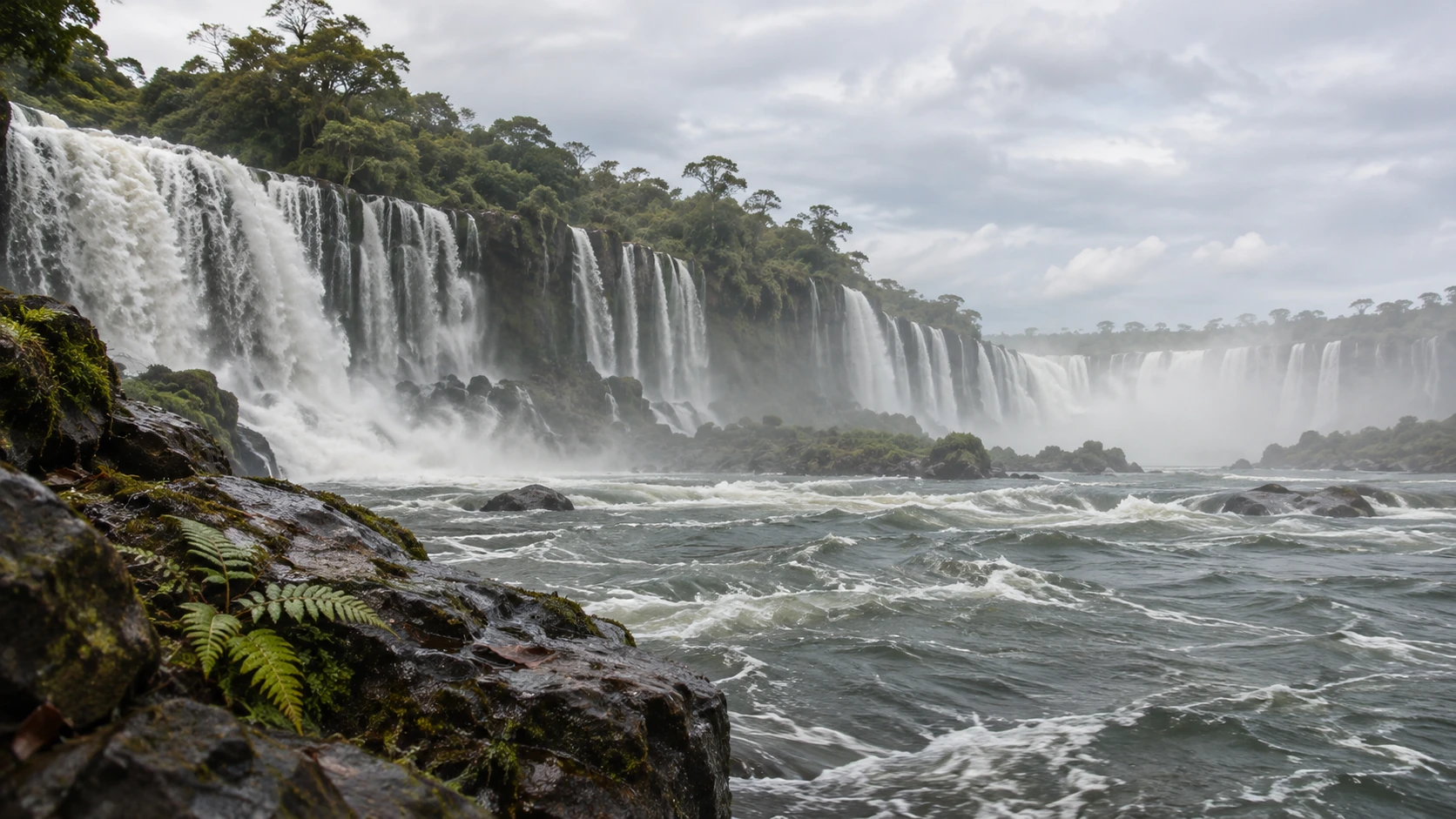
In April 1916, Alberto Santos-Dumont reached Iguaçu on horseback. The retired aviator was staying at Frederico Engel’s Hotel Brasil; Engel and his son accompanied him to the falls. Neldson Marcolin’s account in Pesquisa FAPESP gives a four-hour trail journey on 24 April. The man associated with flight had to travel slowly to see the water. A modern fourteen-day Brazil route asks a related question: how much of the journey will you actually have time to experience?
Why begin an itinerary with Santos-Dumont’s land journey?
The surprise lies in what happened after the view. Marcolin’s 2006 report follows Santos-Dumont along the telegraph route towards Guarapuava, then by car to Ponta Grossa and by train to Curitiba. There, governor Afonso Camargo received him on 8 May. They make the falls a place whose public access had to be argued for, rather than an inevitable stop already waiting on an itinerary.
The park’s later account of Santos-Dumont’s advocacy connects that meeting with the state’s land action in July 1916. The visit and the administrative consequence are separate episodes. Keeping them apart gives the history its shape: arrival, encounter, representation and an eventual decision. It also keeps the traveller’s question close. Reaching a landscape, understanding it and making it available to visitors are different tasks, even when a holiday compresses them into one destination name.
Federal park creation came later. Decree-Law 1,035, dated 10 January 1939, established Iguaçu National Park and left its boundaries to a survey. That is a more precise story than saying the aviator simply founded the park after seeing the falls. A holiday does not need every legal detail, but this distinction changes the way the place is read. Public landscapes acquire institutions over time; a famous visitor can be important without becoming the only actor.
Even the survival of the episode has a human chain. Marcolin reports historical researcher Mário Rangel’s explanation that Elfrida Rios, Engel’s daughter, submitted a letter and a copy of the hotel guest book to a document competition in 1973. The modern account rests partly on that act of preservation. The stay became part of the public historical account through that later documentary work.
When Mário Rangel described the recovered letter and guest-book copy to Pesquisa FAPESP in 2006, he called it This story, forgotten until then
, in translation. Elfrida’s preservation of the records had helped restore the aviator’s visit to the story of the falls.
Across the river, another institutional history developed. Argentina’s national-park cultural account records Carlos Thays’s survey in 1902 and the creation of the Argentine protected area in 1934. It also recognises Mbyá Guaraní communities around the park today. The landscape is therefore neither a single national object nor an empty scene discovered by an arriving celebrity. A thoughtful visit can hold the water, forest and human history together.
The Argentine park history distinguishes the survey, reservation, further report, land purchase and park law as stages. That sequence gives a reason to resist the language of doing both sides as though it were one undifferentiated activity. Two national visits can illuminate the shared falls differently. They also require their own practical arrangements. The border remains real even when the natural system continues across it.
For this journey, the consequence is to protect complete days around Iguaçu rather than attaching the essential visit to a flight arrival. UNESCO’s description of the shared waterfall system supplies the wider natural setting. Our proposed thirteen-night allocation is an editorial choice, not a minimum established by Santos-Dumont’s history. The history gives the stop depth; the dated flight and park arrangements decide how that depth can be enjoyed.
The municipal history of Puerto Iguazú places Victoria Aguirre in the story of road access in 1901, before Santos-Dumont’s visit. It also describes a Thays city proposal that was not built. These episodes widen the cast around the falls. Reaching and planning for the landscape involved several people, projects and institutions; the aviator’s advocacy belongs within that longer history rather than replacing it.
Mário Rangel’s later chronology assembles the Hotel Brasil stay, the horseback journey and the meeting with the governor into a route through the historical record. The sequence is remarkable for its changes of transport. A modern itinerary uses different services, but the distinction between a destination and the effort of reaching it remains useful. Read the proposed room-to-room movements separately from the days intended for the falls.
What can fourteen days comfortably hold?
Thirteen nights are enough for three main settings if the movements between them receive their share of the calendar. Our suggested allocation is four nights in Rio, three around Iguaçu, four in the Paraty area and two back in Rio. The final day is departure. It is an editorial route to discuss with a planner; its virtue is the balance between city life, a concentrated encounter with nature and the slower texture of a coastal town.
The choice deliberately leaves out the Amazon and the Pantanal. Adding a fourth major region would change the holiday’s centre of gravity. Name the experience that prompted the trip before you add more stops. If that experience is watching wildlife, set aside the mornings it deserves and make the rest of the itinerary fit around them.
Count from the night you actually arrive. An overnight flight is not a night in a Brazilian hotel, and a departure early on day fourteen may shorten the last evening. Once flights are known, rebuild the calendar around them. A satisfying route can survive losing one activity more easily than it can survive a chain of arrivals made too late to enjoy the place.
| Days | Nights and base | Main purpose |
|---|---|---|
| 1 to 4 | 4 · Rio | Arrival, landscape and culture |
| 5 to 7 | 3 · Iguaçu | Travel and complete visit days |
| 8 to 11 | 4 · Paraty area | Coast and cultural history |
| 12 to 14 | 2 · Rio | Return, final city day, departure |
How should the first four nights in Rio unfold?
Let the first stay reveal Rio’s relationship with its setting. The Carioca landscape inscription joins mountains, restored forest, designed spaces and coast. That breadth makes four nights useful. The city can hold a landscape outing, cultural time and an afternoon without a fixed appointment. Putting every famous view on the first full day gives weather and fatigue too much power over the experience.
A first day that suits the arrival
Arrival day should suit the arrival. If the flight lands early, agree how the hours before normal room access will work. A request for an early room does not create one. Choose either a confirmed arrangement or a gentle beginning that does not depend on immediate check-in. The first proper meal and the first good night are worth protecting.
On the next two days, pair one substantial outing with something less demanding. The Museu do Amanhã offers a cultural direction beyond the beach. A museum visit asks for a different kind of attention from a mountain viewpoint; the contrast can make the city feel larger without making the day longer. Keep the remaining time flexible enough to return to an interest that emerges.
A hotel address shapes these days. Use our Rio neighbourhood guide to weigh beachfront life against the ease of returning for a rest. If the group wants to split up in the afternoon, ask where everyone would meet for dinner and how far each person would have to travel back.
Ipanema offers a concrete example of the scale at which a day begins. Riotur places its beachfront along Avenida Vieira Souto, between Arpoador and Jardim de Alah. A hotel enquiry in that area can therefore start with the immediate setting, then ask how the day’s more distant visits fit around it. The address should support the hours between organised outings as well as the transport away from it.
Santa Teresa opens a different city chapter. Riotur’s cultural itinerary describes a hilltop district near downtown, with alleys, stairs and arts venues. That physical setting is part of its interest and part of the decision about how to visit. Ask the guide to build an outing around a few meaningful stops rather than assuming that every district can be approached through the same walking pattern.
Why give Iguaçu three nights?
Three nights protect two potential visiting days after the travel day. On day five, reach Foz do Iguaçu by a routing checked for the actual date and settle in. Avoid making a flight arrival responsible for the most important park experience. A delay should reduce the first evening’s ambitions rather than remove the reason for travelling there.
The falls sit within a much larger forest story. Read the Iguaçu National Park inscription for that setting, then decide whether one or both national sides belong in your visit. Two days create room to separate them, or to spend longer on a simpler programme. Crossing into Argentina is a choice to make explicitly with the planner, using each traveller’s documents and entry requirements.
The way you move matters as much as the number of viewpoints. Ask about walking surfaces, steps, exposed stretches and rest opportunities. Give the planner a useful description of mobility and stamina before selecting activities. A programme built around the least comfortable member of the party can still be rich; it simply needs the right level of detail from the beginning.
Do not confuse flexibility with an empty plan. Agree which visits are reserved, which can move between days and what would happen if conditions changed. That leaves the group free to enjoy the place without reopening every decision on arrival. The falls do not need a crowded timetable to feel substantial.
The Argentine cultural account offers an important counterweight to a route written only through spectacular scenery. Mbyá Guaraní communities remain part of the region’s life. That fact does not entitle a visitor to a particular community encounter, and a general itinerary should not turn living people into an automatic excursion. It does mean a guide can help explain that the forest has human histories as well as viewpoints.
The Brazilian decree also reminds us that a protected landscape and its visitor arrangements are related but distinct. It envisaged regulation of visitation and fees; it did not create one timeless way to enter. For a present visit, ask the operating company to identify which admission and guiding components are included. Historical public-access advocacy makes the site meaningful; it does not remove the practical details of a contemporary booking.
Give the two possible park days different jobs. One can establish the scale and setting of the falls; another, if you choose it, can develop the other national approach. A simpler programme may be better for a party that wants fewer movements. Use the shared landscape to frame the choice, then let the traveller’s interest and physical comfort determine how much to include. Both days should remain experiences, rather than a contest to accumulate stops.
The Argentine park’s published visitor map gives the second falls day a physical scale. It lists the Upper Circuit at 1,850 metres and the Lower Circuit at 1,750 metres. The Devil’s Throat circuit is a separate 2,200-metre return walk, with its station and train approach shown on the same map. These are distinct routes through the waterfall setting, not three names for a single viewpoint.
Choose the part of that day that most interests the party before trying to include every circuit. A family wanting one sustained encounter and time to rest is making a different choice from walkers keen to compare several approaches. The published distances help give that preference a concrete form. They are the beginning of the day's allocation; the approach, pauses and chosen connections also use time.
The two complete falls days in this itinerary leave those choices visible. The Brazilian visit has its own day; the Argentine visit has another, with the actual cross-border arrangements joined around it. That separation allows the second day to offer a different relationship with the landscape. It need not repeat the first day's purpose merely to collect another national label.
What makes Paraty more than a beach extension?
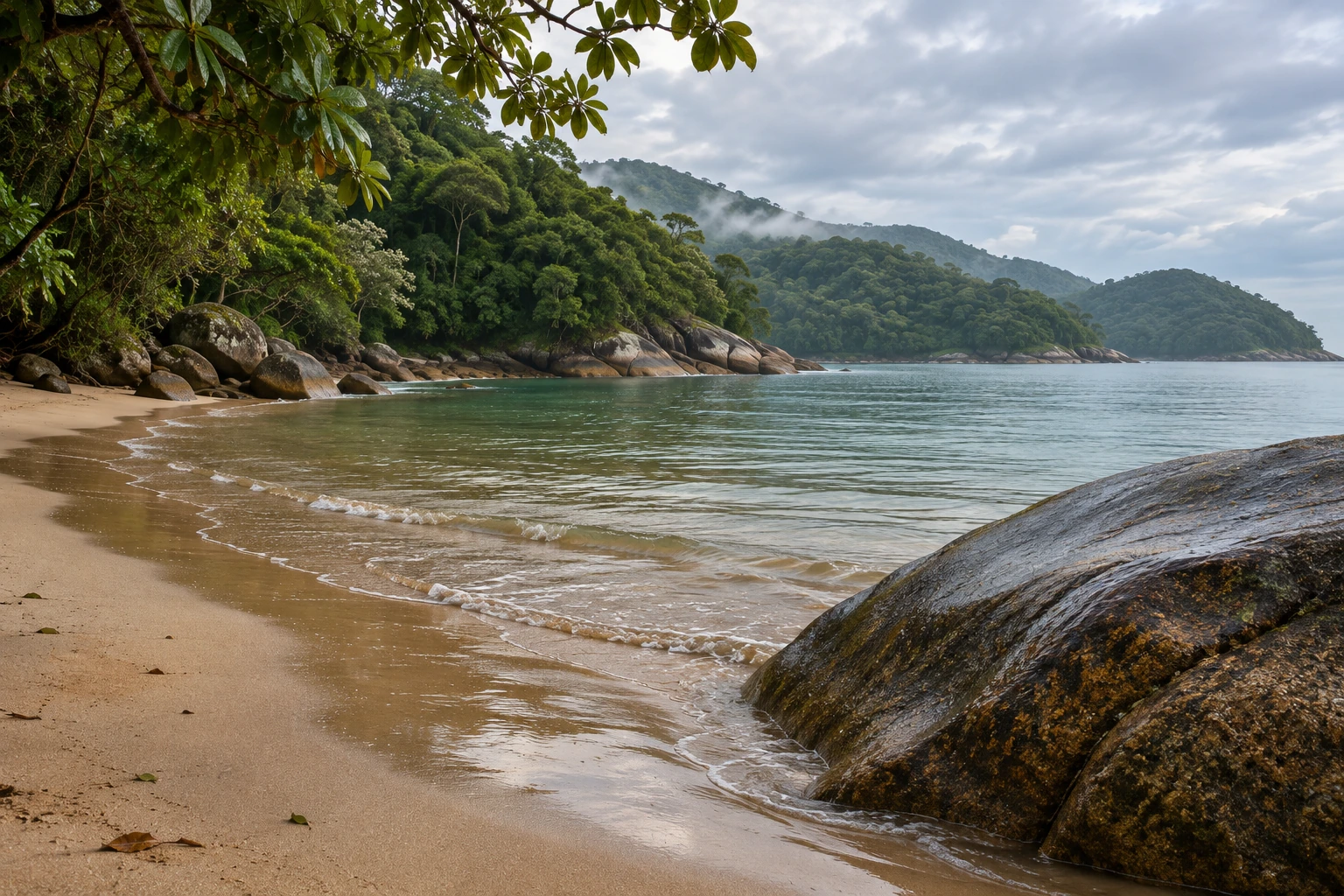
Paraty brings town and forest into the same conversation. UNESCO’s mixed cultural and natural inscription connects the historic centre with protected Atlantic Forest areas. Its port history also includes gold and the traffic in enslaved Africans. The town’s beauty deserves that historical depth. White walls and old streets tell a fuller story when a guide can explain the economy that shaped them.
Four nights allow a day of arrival, town time and a possible outing on the water without demanding that every morning begin early. Choose accommodation for the kind of stay you want: walking into town, being closer to a particular coast, or enjoying a quieter retreat can lead to different addresses. Ask where the property actually sits before falling in love with a photograph.
Day eight is the complicated join in this route. Travel from Iguaçu towards Rio and continue by road only if the confirmed arrival makes the full movement comfortable. Read the whole day from hotel departure to the next room. If it ends too late, use a night in Rio and reduce Paraty by one night. The route should absorb the timetable, rather than force the traveller to absorb an exhausting arrival.
A boat outing needs a separate conversation about the vessel, boarding and conditions. Keep it optional until those details suit the party. Town time can be equally rewarding when it has a purpose: architecture, cultural history or simply enough unhurried hours to notice the relationship between the settlement and the surrounding landscape. A coastal stay earns its nights through contrast.
The mixed inscription also gives the surrounding forest a substantive role. Town time and a landscape outing need not compete as culture and nature on separate sides of the holiday. They can develop the same interest in how a settlement occupies its setting. Four nights are useful here because the programme can have one concentrated historical day and another less structured day without making either feel like an interruption to the rest.
For a family, the distance issue discussed by Ada Tours makes the final approach especially worth examining. Its family-travel page recognises the burden of moving around Brazil. Our inference is to ask for the whole travel day in plain language, including breaks, luggage and arrival at the property. If the timetable makes that day too demanding, change the allocation rather than treating the family’s endurance as the route’s spare capacity.
Once in the Paraty area, choose the property through its relationship to the town and coast. A stay chosen for quiet surroundings can be rewarding, but it changes how town visits and water activities begin. Ask where the vehicle can reach, how bags move and what the return after an outing involves. The point is to understand the ordinary day before it becomes the holiday’s settled rhythm.
When should the Amazon or Pantanal replace this route?
Choose a nature-led alternative when wildlife or rainforest is the reason for travelling. Replace substantial portions of the falls-and-coast programme so the new region has enough nights and a sensible gateway. The Pantanal conservation inscription describes a wetland ecosystem; an Amazon lodge asks a different set of questions about river access and activities. They are separate experiences, not interchangeable green spaces.
For a Pantanal discussion, Embratur’s Cuiabá destination guidance helps introduce the gateway and surrounding landscapes. Choose the specific lodge area and activity before treating a season label as an answer. Our regional seasons article explains why a river-based journey and a road-based wildlife stay can favour different conditions.
Ask the planner to show the new version with the same honesty as the original. How many nights are at the lodge? Which nights are at a gateway? What happens on the arrival and departure days? A four-night allowance can include more movement than the phrase suggests. The rewarding alternative is the one that makes the nature stay central, with enough time to be there.
Ada Tours’ eight- and twelve-day nature-route comparison makes a useful alternative concrete. The shorter idea joins Northern Pantanal, Nobres, Chapada and Rio; the longer adds Jardim d’Amazonia and Campo Novo. It distinguishes three from five ground-base changes and treats the onward Rio connection separately. That distinction gives an agency a way to count movements more honestly than simply counting destination names in the heading.
The eight- and twelve-day examples are land-route ideas with flights outside their stated land arrangements. They are not transport schedules that can be fitted unchanged around any arrival. Compare them with the time actually available after the international flight. If the northern nature programme becomes the main purpose, rebuild the rest of the holiday around its gateways and meaningful activity days. Replacing a region can be more useful than stretching every stop thinner.
One published family itinerary allocates three nights to Rio, two to Foz, three to the Pantanal, two to Salvador and three to Praia do Forte. It approaches the Pantanal through Campo Grande. If a lodge in another part of the wetland interests you, first find out how to reach it. Mark that transfer and the first outing on the calendar before you borrow the same number of nights.
The same example distinguishes private transfers from regular lodge activities. If the client expects a private programme throughout, that difference needs discussion before the price is compared with another itinerary. The issue is not whether one model is universally better. It is whether the booked experience matches the traveller’s expectation, including the part of the journey in which other lodge guests may share the activities.
Both examples show why a nature extension can change the holiday’s entire shape. A gateway is not a neutral dot between experiences; it determines the next road or lodge movement. An activity day is not equivalent to a night arriving late. Read each proposed route through its own sequence, then choose a version whose reason for travel remains visible from beginning to end.
What would a different balance change in thirteen nights?
The four-plus-three-plus-four-plus-two allocation gives Rio, the falls and the coast time of their own, with a final return to Rio. A family looking for a gentler pace can keep all thirteen nights and choose fewer bases. That lets someone leave an outing early or spend a morning at the hotel without losing their only chance to see the town.
A city-and-coast version could give six nights to the first Rio stay, five to Paraty and two to the final Rio stay. It removes the falls and the domestic air movements associated with that chapter. Rio gains room for cultural interests beyond the first introduction; Paraty gains time for both its historic town and the surrounding Atlantic Forest setting. The traveller chooses a deeper relationship with two places in exchange for the waterfall experience. This is an editorial allocation, to be joined by the actual transport selected for the trip.
If Iguaçu is the reason for travelling, the opposite decision can make sense. Five nights in Rio, four around the falls and four back in Rio also total thirteen. There is no Paraty chapter in that version. The additional falls time can remain available for the protected landscape and for a considered visit to the Argentine side, with its separate history and entry arrangements. The final Rio stay becomes a second city chapter, rather than a brief recovery before departure.
These alternatives make the trade visible. Removing a destination changes the character of a holiday, not simply its number of transfers. The coast-led version gives up the falls; the falls-led version gives up the coast. A visitor who wants all three settings may prefer the original route. Someone drawn strongly to one landscape may find the concentrated version more memorable. The question is which experience you would regret leaving out, and which extra movement genuinely earns its place.
Suppose a traveller wants to make time for forest walks as well as the city, falls and coast. Start by putting the forest stay on the same calendar as the rest of the journey, including the domestic flights and the transfer between the gateway and the lodge. If the forest is the reason to come, give it the unhurried part of the trip. Drop a stop before reducing the days you most want to spend there.
Passion Brazil’s family route uses thirteen nights across Rio, Foz, the Pantanal, Salvador and Praia do Forte. Its five bases create a different balance from our three-setting route. The published service pattern combines private transfers with regular lodge activities. The comparison therefore involves both the calendar and the form of the experiences, rather than a simple contest between the same number of nights.
Read the alternatives through the days they create. One gives more time to a city and its coast; another protects the falls; a wider circuit introduces additional ecosystems and cultural settings. A longer list is worthwhile when those differences are the purpose of travelling. A concentrated route is worthwhile when returning to the same neighbourhood, walking again through a town or leaving an afternoon unclaimed is part of the pleasure.
Why finish with two more nights in Rio?
The final Rio stay separates a substantial road return from the international departure. It also leaves space for the city interest you held back at the beginning. Use day twelve to return, day thirteen for one final focus and day fourteen for departure. Check the booked airport and hotel geography together; Rio is a city, not a single departure point.
This ending creates a different mood from a last-minute race towards an airport. You can revisit a neighbourhood, make time for a cultural stop or leave the day open. If the international flight is late, discuss luggage and room access before arrival. A quiet last afternoon is easier to enjoy when the practical arrangements are already understood.
Compare the time actually spent at each stop and note which activities are private or shared. Ask where the group meets its guide, what happens to its luggage between hotels and which part of the day remains free after arrival. Two itineraries with the same stops can leave very different amounts of time for the places themselves.
On the last city day, resist reopening the entire Rio landscape as a list of missed sights. Choose one remaining interest or leave the time open.
The documented aviator travelled by horse, road and rail to see a place and make a case for it. Modern transport changes the available choices, but it does not remove the difference between moving and experiencing. Give the journey enough time to do both. The best fourteen days leave the traveller with places to remember, not only proof that the route was possible.
What else should you consider?
How many nights does this route use?
Thirteen nights: four in Rio, three around Iguaçu, four around Paraty and two final nights in Rio. Day fourteen is departure.
Can I include both the Amazon and the Pantanal?
For this two-week route, choose one nature priority and replace other regions. Both require their own gateways, transfer days and meaningful time at the destination.
Do I have to visit the Argentine side of the falls?
No. It is an optional international visit. Decide with your planner after checking documents, entry requirements and the time needed for the crossing.
What if the flight to Rio arrives too late for Paraty?
Spend the night in Rio and reduce the Paraty stay, or change the sequence. Read the complete travel day before committing to the road continuation.
Why return to Rio before flying home?
The return stay separates the long road movement from the international departure and leaves another useful city day. Check the actual departure airport.
Is this a scheduled departure?
This is a suggested allocation of time. A travel company can develop it into a dated itinerary with confirmed transport, accommodation and services.
Sources and further reading
Reviewed 18 November 2026
- Family vacation Brazil
- Which Brazil Nature Route Fits Your Group in 2026?
- 100 anos no ar
- Santos Dumont: o padrinho do parque
- Decreto-Lei1.035 de10Janeiro1939
- Patrimonio cultural / Parque Nacional Iguazú
- Historia / Administración de Parques Nacionales
- UNESCO Iguaçu
- Reseña Histórica
- Santos Dumont no Paraná em1916: Cronologia
- UNESCO Carioca landscapes
- Museu do Amanhã official
- Praia de Ipanema
- Santa Teresa Itinerary
- Mapa del área Cataratas, Parque Nacional Iguazú
- UNESCO Paraty and Ilha Grande
- UNESCO Pantanal
- Embratur Cuiabá incentive destination
- Family Trip