
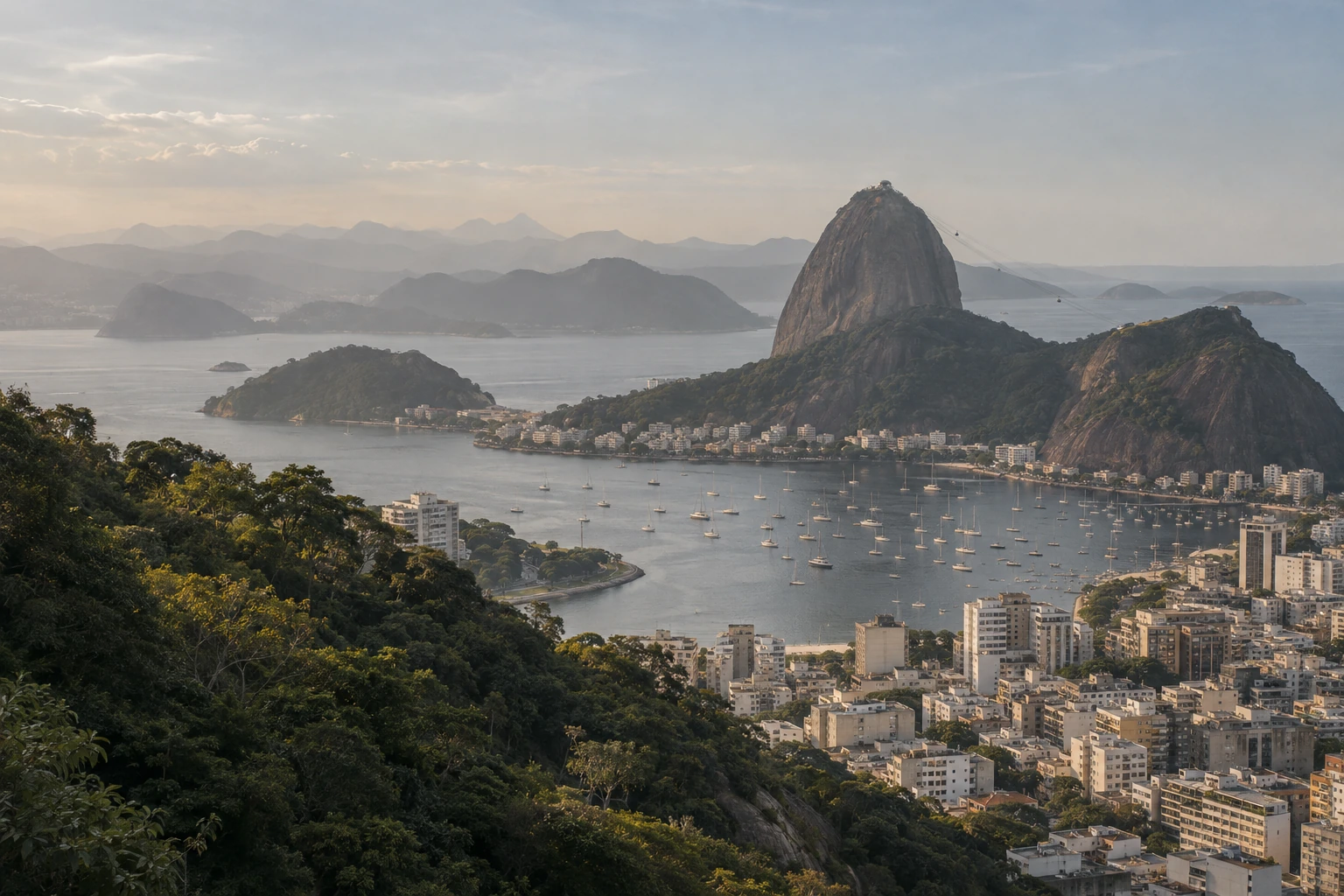
Before the Rio Games, planner Bill Hanway told New Civil Engineer that legacy had mattered from the start. In Dave Parker’s August 2016 article, Hanway and collaborator Peter Ayres described work that had to serve the event, its transition and its later life. Their account of Olympic Park contains three different calendars. A congress planner needs a smaller version of the same discipline: choose the present venue, the daily movements and the hotel relationship before borrowing an image of the city.
What can an Olympic plan teach a congress organiser?
On 13 October 2011, AECOM announced that Rio had accepted its Olympic masterplan. The announcement identified a Barra da Tijuca site and distinguished Games, transition and legacy. It also named a team that included Rio-based DG Architecture, Wilkinson Eyre, Pujol Barcelona, IMG Sports and Expedition. The project was a collaboration with several kinds of expertise, rather than the work of a single figure sketching a finished city.
The projected transition had its own span of years. That detail matters because the space required for an event and the space useful afterwards are not automatically identical. A plan can anticipate the difference, but the anticipation is not proof that every later stage has occurred. The same distinction applies at a congress scale: a venue photograph, a proposed floor plan and a confirmed event-day arrangement describe different states of the space.
Parker’s contemporary article brought Hanway’s design intention into focus. Ayres described the compressed time available in Rio compared with London and the need to plan event, transition and legacy together. The account discussed demountable venues and future community uses. Read in its 2016 context, it records what the designers intended, with the pressure of the approaching event visible in the programme they were trying to reconcile.
AECOM’s project retrospective likewise describes circulation and anticipated post-Games transformation, including a linear park. The forward-looking language is important. A congress itinerary written today should not inherit that language as a statement that every planned place or connection is complete. Use the historical plan to understand the geography, then obtain current information for the particular venue and the services you intend to book.
Hanway’s later assessment was direct: the legacy has been disappointing
. In the account of his retrospective discussion, design intention had become a judgment about the city after the Games.
The IOC’s institutional account places more emphasis on transport improvements and urban renewal, while acknowledging governance-related delays. The difference in emphasis is useful to a planner. Large organisations can describe the same city through different purposes and time horizons. The buyer does not need to settle the whole legacy debate to make a sound accommodation decision. The buyer needs to establish which actual connections and spaces serve this event now.
Our inference is straightforward: an event map is a record of a particular task, not an all-purpose promise about present travel. Barra is not one interchangeable location, and an Olympic Park plan is not a plan of Riocentro. Keep the facility names explicit. Ask the venue and local operating team to describe the current entrances, movement pattern and services for your programme, then let those answers determine where delegates stay.
The principle becomes tangible in Windsor’s Barra convention complex. Accommodation, modular event space and catering sit within a distributed hotel-and-meeting offer. A planner can investigate an integrated programme there, but the word integrated still needs a floor plan. Delegates experience a particular path between bedrooms, registration, sessions and meals. The daily convenience must be demonstrated through that path, not inferred from a combined headline area.
What should decide the congress location?
The programme should decide the geography. Before asking for an attractive hotel shortlist, identify the principal venue, the start and finish of the daily sessions and the people whose movements are least flexible. A speaker preparing before the opening, an exhibitor carrying materials and a delegate joining only one day may need different arrangements even when they attend the same event.
Riocentro describes convention rooms and exhibition pavilions that can serve different formats. The meaningful capacity is the one attached to the proposed layout. Ask for the plan that includes the stage, production positions, circulation and any exhibition requirements. A large headline capacity does not establish that the event will fit comfortably once the working space is drawn.
Choose the main congress location before refining social events. An evening venue can be moved more easily than an exhibition hall or a full-day technical programme. Keeping that hierarchy clear prevents the most photogenic component from dictating every other movement. The city can still be part of the experience; it needs a sensible place in the schedule.
| Event focus | Accommodation question | Plan to request |
|---|---|---|
| Riocentro programme | Does nearby accommodation suit delegates? | Room block and entrance access |
| Hotel-led meeting | Can sessions and stays fit together? | Complete space and room plan |
| South Zone social event | Does the evening justify the movement? | Real transport and return window |
A dedicated exhibition venue, a hotel convention complex and a smaller meeting hotel answer different briefs. Begin with the event’s irreducible requirements: a plenary, simultaneous sessions, exhibition circulation, production and the hours when people must be present. Then ask which setting can accommodate them coherently. The Windsor complex description is useful because it makes the distribution of rooms across hotel floors part of the enquiry rather than hiding it behind a single grand total.
Fairmont Rio Copacabana’s combined-room table shows how precise the comparison can become. Rio de Janeiro I, II and III together are listed as 702 square metres, with 700 in theatre layout, 290 classroom and 410 banquet. Those are different arrangements of the same combined space. An event that needs classroom seating cannot borrow the theatre number merely because both appear beside the ballroom name.
The table supplies a useful starting constraint, not a finished design. Staging, production positions and circulation must fit the actual proposal. Ask the hotel to draw the configuration you intend to use and explain any reduction created by your particular requirements. This makes the conversation about the event people will attend. A capacity headline can then serve as orientation instead of being mistaken for the final answer.
At Santa Teresa Hotel RJ-MGallery, the meetings proposition is different again: natural light, projectors and settings such as Bar dos Descasados for cocktails or private dinners. A smaller leadership gathering could investigate that atmosphere. A large exhibition brief should not be squeezed into a boutique setting because the photographs are appealing. Let the programme choose the scale, then assess whether the proposed room and adjacent spaces support it.
When does staying in Barra make sense?
A Barra base makes sense when the main programme is there and proximity protects useful delegate time. Lagune Barra Hotel positions itself in Barra Olímpica and publishes an inventory of 306 rooms. That is a description of the property, not the number available to your event. Ask for the actual room allocation and dates before building the delegate accommodation promise around it.
Hilton Barra offers ten meeting rooms and 298 guestrooms, offering a different starting point for a hotel-led event. The comparison with a dedicated venue should be made around the event’s format. A meeting with accommodation under one roof and an exhibition with separate hotel blocks have different advantages and different movements.
Keep room location and event access in the same conversation. Ask how participants move from the hotel to the correct entrance, especially if registration and sessions occupy different areas. For a large group, the entrance named on the driver’s instruction can matter more than the destination name. Confirm practical access with the venue team rather than relying on the pin displayed by a general map.
A Barra programme can include leisure, but it should not promise the South Zone as an effortless spare hour. Put any cultural or coastal outing into a real time window, with a return plan. If the event ends late, a local dinner may offer more pleasure than another substantial group movement. Comfort can come from reducing the number of departures.
Riocentro and its adjacent Lagune hotel make a proximity-led question possible. The venue operator’s description and hotel information establish the relationship, but the event still needs exact-date room availability and the appropriate venue entrance. A large room inventory is not the same as a block assigned to the congress. Keep the accommodation promise aligned with what the hotel has actually offered for those nights.
Windsor’s Barra accommodation and convention offer creates another form of proximity, distributed between the named hotels and event floors. Its official description should lead to questions about the actual daily route. Which lift or circulation area serves the session? Where does a delegate return during a break? If participants are split between hotels, how does that affect registration and the first session? The answers can change the value of an apparently convenient complex.
Hilton Barra’s event information provides a third hotel-led option, with its own guestrooms and meeting spaces. Compare it using the same programme rather than a different version drawn to make each hotel look suitable. The venue decision is easier to defend when every candidate is asked to accommodate the same plenary, breakouts and meal pattern. If the programme must change to fit, make that change visible before comparing prices.
Do not collapse these alternatives into a single phrase such as near the congress. A venue-adjacent hotel and a broader Barra base may offer different movements. Ask the operating proposal to name the arrival point and the return pattern for each group. The organiser can then decide whether the hotel’s character, available rooms or commercial terms justify the journey that comes with it.
What changes when the hotel is also the venue?
A hotel-led event brings bedrooms and sessions closer together, but the programme still needs a complete space plan. Ask how meeting rooms connect, where refreshments sit, whether setup crosses guest circulation and which areas remain exclusive to the group. A small event can become awkward if its sessions are scattered, even when every room individually meets a capacity figure.
Use the hotel’s own service information to test assumptions. Hilton Barra’s service information lists airport shuttles as unavailable and breakfast for a fee. Those details show why a room reservation should not be treated as a complete delegate package. Ask the dated proposal to identify the meal basis and any transport included for the event.
Production also has its own timetable. A venue can be available for the session while the setup time you need has not been secured. Ask for access before and after the delegate programme, the supplier loading arrangements and the point at which changes stop being included. These questions belong early enough to influence venue choice, not in the final week.
A South Zone hotel meeting can make sense when the event itself belongs there. Fairmont’s Avenida Atlântica location and meeting offer put a particular beachfront address into the discussion. That creates a different basis for the accommodation choice from a Riocentro-led programme. It may suit a meeting whose sessions, meals and informal time are centred on the hotel. It does not make a separate Barra commitment part of the same immediate setting.
A smaller gathering at Santa Teresa Hotel RJ-MGallery asks another set of questions. The appeal of a private dinner, garden or pool setting should be matched to the actual use, with room-specific seating and service arrangements confirmed. A page-level maximum does not tell you whether the desired seated format works. Ask for the space, the layout and the supporting areas together, especially when the atmosphere is a major reason for the choice.
Santa Teresa’s hilltop geography also belongs in the event enquiry. An organiser should understand how delegates and suppliers arrive at the selected property and how the evening ends. The cultural character of the district is a reason to explore it thoughtfully, not evidence of universal ease of access. Describe mobility and production requirements before the event setting becomes a fixed part of the invitation.
The historical planners’ three-stage discipline offers a small but useful analogy here. The room before guests arrive, the room during the programme and the room after breakdown are different operating states. Our inference is to make time for all three. A booking that covers only the session can leave setup and removal unresolved. Ask the venue to show the access period in the proposal, with the other suppliers working from the same timings.
How should a room block be described?
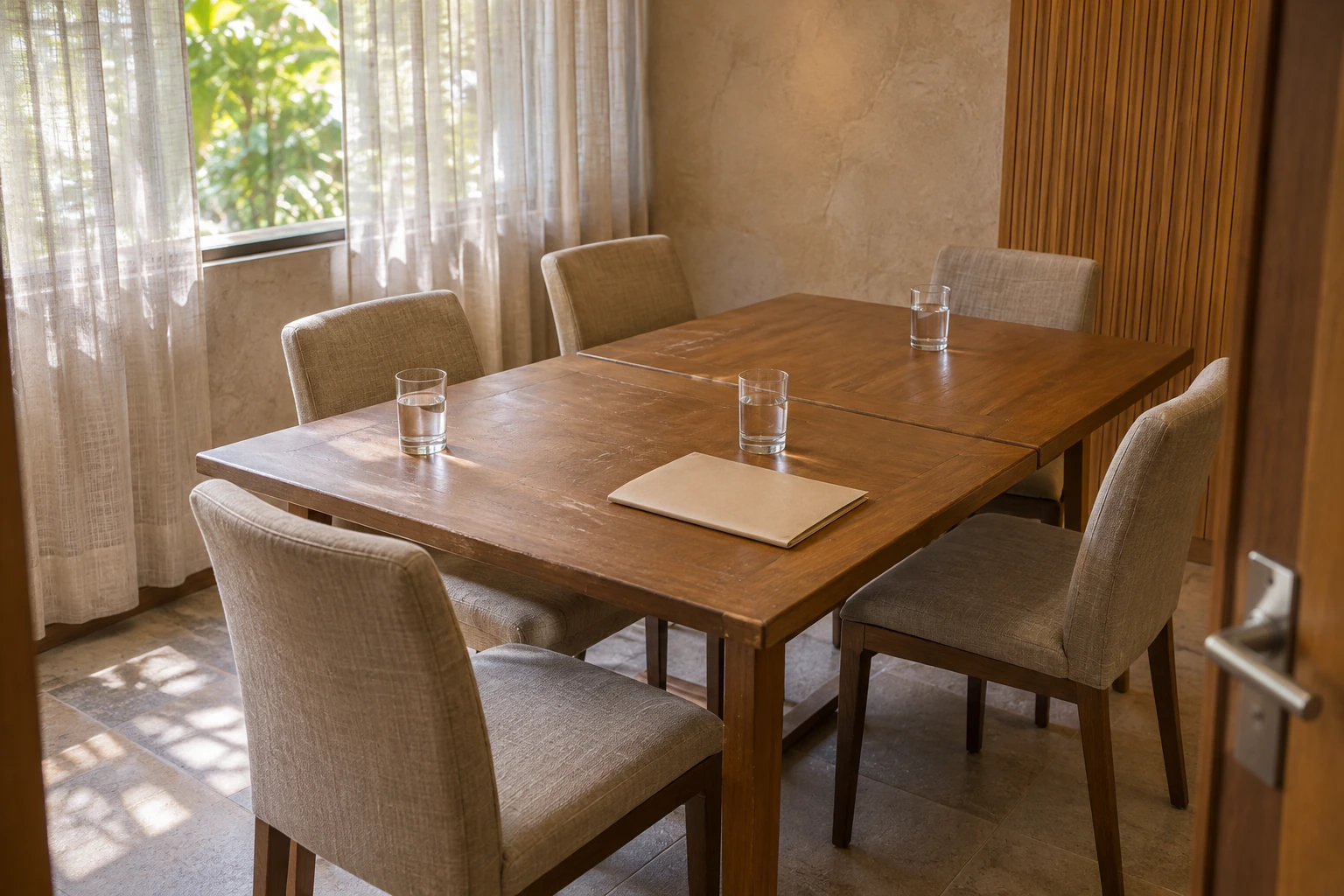
Describe the room block as an allocation with dates and conditions. Specify arrival and departure nights, occupancy, room categories and any accessible-room requirements. Then identify the dates when unused rooms are released and the conditions for name changes or cancellations. The block should remain understandable when delegates begin requesting exceptions.
Keep the main group pattern separate from early arrivals and private extensions. A speaker arriving before the group may need another room category or a different transfer. A delegate remaining for a weekend may book under different conditions. Ask the accommodation team to explain how these additions will be handled and which contact owns the change.
The event organiser also needs a reliable version of the rooming list. Agree who maintains it, how revisions are communicated and which information is necessary for the hotel. Keep traveller details within the booking process rather than spreading them through casual messages. Clear document ownership is practical care for both the delegates and the people receiving them.
Request a single proposal that connects the venue plan with vehicles, catering and staff. If several suppliers contribute, give them the same version of the schedule and ask who keeps it current. For the hotel block and transport, specify which arrival counts you expect to change and when each team needs the final numbers.
Ada Tours’ congress logistics account identifies a catering grid, vehicle class and count, printed materials, stand building and a named coordinator among the subjects to settle. Those are practical distinctions for an organiser comparing proposals. Put them against the actual programme: breakfast before an early departure, refreshments between parallel sessions, or a dinner after an off-site visit. A single line labelled catering cannot describe those different moments adequately.
The room block and catering pattern should then be read together. A delegate arriving after the main dinner needs a different plan from someone checking in before registration. A speaker staying an extra night may need accommodation outside the central group dates. Ask the coordinator to show how individual exceptions reach the hotel and transport team without changing the instructions for everyone else.
A plenary room and a bedroom block can also have different commercial lives. The meeting space may suit the programme while the desired room categories remain limited. The hotel’s meeting information is the start of venue assessment, not confirmation of accommodation. Ask for both parts in one coherent proposal, identifying any rooms outside the central allocation. That allows the organiser to describe the delegate package accurately.
Begin with a hypothetical rooming allocation for 320 delegates. Suppose 240 delegates want single-use rooms and 80 share in 40 twin rooms. The delegates then need 280 rooms each night. Add 20 staff staying in single-use rooms and the nightly total becomes 300. Over four nights, that is 1,200 room nights. The hotel request has become more precise without changing the event's delegate count. It now describes who shares, who stays alone and how long the rooms are needed.
Now suppose those 80 sharing delegates all choose single-use rooms. They need 80 rooms instead of 40, adding 40 rooms each night. Across the same four nights, the total rises by 160 room nights to 1,360. The meeting still has 320 delegates, but its accommodation request has changed considerably. This is why a headcount alone cannot settle a room block. Make the occupancy pattern visible before comparing hotel proposals, then revise the allocation when the actual rooming choices change.
How do arrival waves become a workable transfer plan?
Start with the actual flight and airport for each arrival. Rio’s Galeão and Santos Dumont should be written explicitly in the plan; the city name alone is insufficient. Group travellers only when the timing, terminal process and luggage needs make the combination reasonable. A large vehicle does not make an early arrival happy to wait indefinitely for a later flight.
Describe each transfer in terms a traveller can use: meeting location, identification, luggage allowance, accessibility and the contact for a missed meeting. Separately, give the operating team the flight-monitoring and change instructions. The public delegate note should be simple because the detailed work has already been done elsewhere.
Boarding, luggage and individual needs
Ask about accessible boarding before choosing the vehicle. A claim that transport is available does not establish that it suits every delegate. Share the actual requirements through the appropriate booking route and confirm what has been arranged. The same care applies to luggage, exhibition materials and accompanying travellers who are not part of the main congress programme.
Ada Tours’ trade due-diligence guide is useful for clarifying who can approve a change. Give that question a real setting: a flight is delayed, the next vehicle is committed elsewhere and the delegate still needs to reach the hotel. Who makes the decision, who approves additional cost and who updates the organiser? The answer should be agreed before arrivals begin.
The IOC’s transport account gives historical context for the city’s evolving connections, but it should not be used as a substitute for the current congress movement plan. The relevant route, operating hours and accessibility need confirmation for the particular journey. An old event map can be useful background while remaining inadequate as a dispatch document. This distinction protects both the organiser’s assumptions and the traveller’s day.
What changes when 320 delegates use the same ballroom differently?
The same 320 delegates create another question at the meeting venue. Fairmont Rio Copacabana publishes capacities for its combined Rio de Janeiro I, II and III ballroom: 700 in theatre format, 290 classroom and 410 banquet. The same delegate count therefore fits the published theatre figure and exceeds the classroom figure. A venue description such as large meeting room cannot answer the question without the seating format. The arithmetic is simple; its effect on the event is substantial.
A plenary with rows of seats and a training session with work surfaces ask the room to do different things. For this example, the organiser can investigate a theatre-style programme at that published scale, or change the training format, room or number attending. Calling the same space suitable for 320 people throughout the day would hide the actual decision. The programme needs a room arrangement that supports what delegates will do, rather than one capacity carried from the first session into every later activity.
A distributed complex such as Windsor’s Barra convention operation raises another possibility: divide the programme among specific rooms. Its published aggregate space and room totals describe the complex, not one classroom. If 320 delegates break into smaller sessions, the comparison needs the actual combination of rooms and the paths between them. A compact schedule depends on how those selected spaces work together. The useful unit is the delegate’s next movement, rather than the entire building’s headline floor area.
A room used for a plenary, then a meal, also has a changeover. The 410-person banquet figure does not supply a setup period between activities. The organiser can compare a programme that holds one configuration throughout with one that changes it during a longer interval. This is a concrete application of the event, transition and later-use distinction described by Hanway and Ayres. A room plan has a sequence in time as well as an arrangement on paper.
A smaller private gathering at Santa Teresa Hotel RJ-MGallery belongs to a different comparison. Its published up-to-100-person event statement and private-dining or cocktail settings can begin an enquiry, while the actual seated arrangement determines the format. Scaling the programme down can change the kind of conversation the event supports. It should also change the comparison, rather than preserving a large-congress checklist at a smaller address.
For 320 delegates, a beachfront ballroom, a distributed Barra complex and a Riocentro-led congress would create different daily movements. Ask the venue and transport team to show a complete working day for the option you favour. Include the time it takes to change the room, collect a delegate who missed the main departure and get people to the next session.
Where can the city enter the programme?
Bring Rio into the event through a few well-chosen moments with enough time to enjoy them. The Carioca landscape inscription explains a city shaped by mountain, forest and sea. An outing can develop one of those relationships rather than trying to collect every view. Match its physical demands and duration to the delegates’ working day.
The Museu do Amanhã provides cultural and event-enquiry routes. A public museum visit and a privately hired event are different arrangements, so decide which you are proposing before placing it in the programme. The space, access and services need confirmation through the appropriate channel. A visitor ticket does not establish exclusive access for a group.
For a heritage-hotel setting, Copacabana Palace offers a beachfront context distinct from Barra. Use that difference thoughtfully: a social event at a different address adds a journey, and the evening must justify it. Our neighbourhood guide helps explain why a holiday address and a congress address can be chosen for different reasons.
Check the dates against the city programme and request a room proposal and venue confirmation for the nights you need. Ask whether rooms can be held while you confirm attendance and when the price or cancellation terms change. Verify the relevant business identity and registration details when comparing local services.
Give the final delegate communication to someone who did not build the plan. Can they identify the airport, find the meeting point and understand the next morning without another explanation? This simple reading test exposes gaps while there is still time to repair them. The operating document can be detailed; the traveller’s instructions should be clear enough to use after a long flight.
For an incentive discussion, Brazil Sensations’ incentive examples supply concrete ideas to evaluate: Guanabara sailing, a Rio costume-making workshop or a São Paulo graffiti activity in a multi-city programme. The choice should follow the group’s purpose. A participatory workshop can serve a different evening from a reception, while a sailing proposal needs its own boarding, weather and return arrangements.
A plan earns its value through what happens after the attractive drawing. For your congress, establish the present room, the present entrance and the present journey between them. Then add the social and cultural moments that fit. Delegates should be able to give their attention to the event and the city, because the distinctions behind both have been thought through.
What else should you consider?
Should every Rio congress stay in Barra?
No. Choose accommodation around the confirmed venue and daily programme. Barra is a relevant base for Riocentro and other events in that area.
Is published hotel inventory a room block?
No. Total guestrooms describe the property. Your room block needs an exact-date allocation with occupancy, categories, release dates and cancellation conditions.
Are airport transfers included with a hotel room?
Check the booking. Hotel information and group proposals can separate breakfast, transport and other services from the room rate.
What belongs in a delegate arrival plan?
Record flight, airport, meeting point, luggage, accessibility and a contact for problems. Agree flight monitoring and change authority with the operating team.
Can a museum visit become a private reception?
Only through a separate event arrangement. Public admission does not establish private hire, exclusivity or the event services required.
How do you compare venue capacities?
Use the actual event layout, including staging, circulation and production. Headline room or pavilion capacity alone cannot confirm the fit.
Sources and further reading
Reviewed 18 November 2026
- Vetting a Brazil DMC’s Logistics Before You Book a Congress
- Vetting a Brazil DMC Partner: A Trade Due-Diligence Checklist
- Olympic bequest
- AECOM wins master plan design contract for2016Rio Olympic and Paralympic Games
- Rio2016 Olympic and Paralympic Games
- Designing Olympic Cities
- Rio2016: Shaping urban renewal and social progress in challenging times
- Windsor Convention Center & Hotels
- Fairmont Rio Copacabana meetings
- Santa Teresa Hotel RJ-MGallery meetings
- Lagune Barra Hotel
- Hilton Barra events
- Riocentro venue operator
- Hilton Barra hotel information
- Santa Teresa Itinerary
- UNESCO Carioca landscapes
- Museu do Amanhã official
- Copacabana Palace official
- The Best of Brazil