
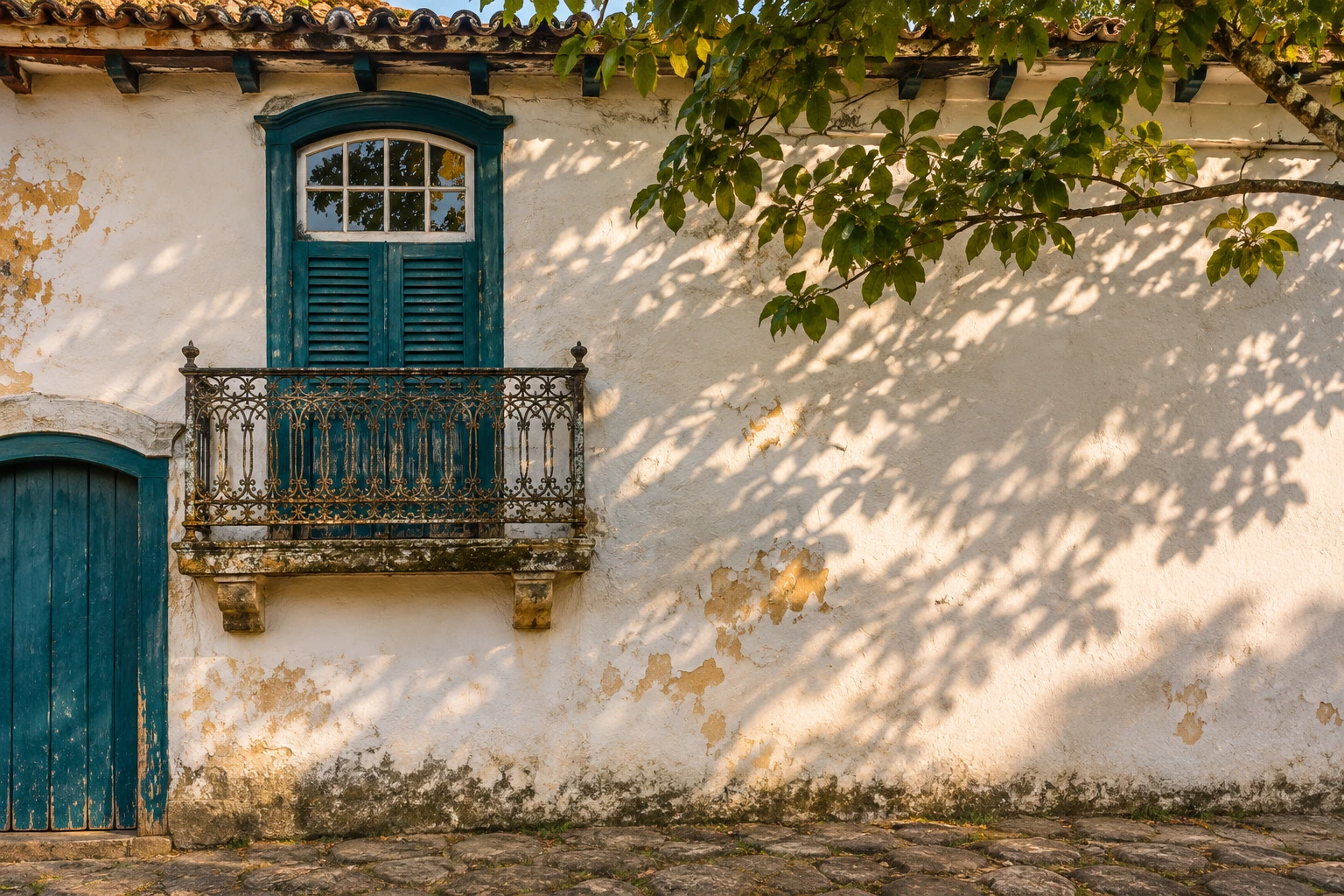
In March 1893, Crispim do Amaral’s design for the Teatro Amazonas façade went on display at the Belém bookshop Tavares Cardoso & Cia. A theatre had entered the city as a drawing, before it could welcome an audience.
It is a small beginning for a journey through Brazil: a person, a place and something not yet finished. Follow that curiosity beyond the familiar photograph. A city can become more than its view; a coast can reveal the history behind its handsome streets. The richest route gives those discoveries time.
What was an Amazon theatre doing in a Belém bookshop?
An earlier document offers a more intimate introduction to the artist. In an 1884 petition, Amaral recalled leaving his studies after his father’s death to support his mother and younger siblings. I was then sixteen years old
, he wrote, in translation. Family responsibility preceded the theatre commission.
That young person is difficult to see in a photograph of a grand building. The petition changes the scale. Before the commission and its public ambitions came the work of sustaining a household. It gives the visitor someone to think about while looking at surfaces that can otherwise seem to have appeared fully formed. A decorative interior is also the outcome of people’s choices and labour.
A surviving dome plan bears Willy von Bancels’s signature; the division of authorship remains uncertain. The theatre held a lyrical concert on 31 December 1896; its opera season opened with La Gioconda on 7 January 1897.
There are several stories within that short sequence: a design shown before a building opens, a contribution whose boundaries remain debated, and a theatre becoming a place of performance. The attraction is more human when its making remains visible. We can appreciate its scale while leaving room for the questions that its appearance alone cannot answer.
In Paulo André Nunes’s A Crítica report, collection manager Silvia Angelina described the pressure behind a renewed archival effort, in translation: We were receiving many research requests and were unable to meet them.
The work intensified in April 2019. Angelina, Hélio Dantas and Allan Diego traced documents scattered across Manaus archives. Among the discoveries was a proposal to remove the dome. The proposal did not become its dismantling.
The archivists bring a different kind of attention to the same landmark. Their work concerns papers that can be overlooked when a building’s most familiar image takes over its story. For a visitor, that is an invitation to look twice. What first appears to be a settled monument becomes a place whose past is still being understood by people caring for it now.
A later exhibition brought the making of the building into public view. The 125th-anniversary exhibition opened on 22 September 2021, with artist Jandr Reis as curator. Construction plans and textiles were among its objects in the Salão Verde. Director Sigrid Cetraro described the original pieces as material the public had not previously seen, opening another way to understand the familiar building. Reis drew attention to images and pieces such as the dome’s tiles and the way they were assembled. A roof usually encountered as a distant shape could be considered through individual parts, with the work of making it brought closer.
The opening report also named cousins Alessandra Maciel and Valesca Alexandre, both visiting the theatre for the first time. One described living in Manacapuru and using a holiday in the city to learn more about her state’s culture. A widely recognised landmark still held a first encounter for people connected with its region. Their visit gives the story another scale: after the artists, officials and archivists come the people finding a way into the building for themselves.
UNESCO’s Amazonia Theaters inscription joins Teatro Amazonas and Largo de São Sebastião in Manaus with Theatro da Paz and Praça da República in Belém. European architectural references and Amazonian motifs meet in these urban ensembles, shaped by the rubber economy.
An Amazon journey can therefore begin with public space, decoration and performance as well as forest and water. The city is a subject in its own right. Giving it a real place in the itinerary makes the move onward more interesting: one setting does not have to erase the other. The visitor can carry questions from the square into the next chapter, while allowing each environment its own time.
What kind of Brazil are you hoping to meet?
Choose the interest that gives the trip its purpose before choosing its length of list. A first encounter might centre on Rio’s landscape and cultural life. Another traveller may want time in wetlands, or a rainforest stay reached through a particular gateway. Someone returning after a city visit might prefer the historical coast. These are different beginnings, each capable of supporting a substantial journey.
The country’s variety is an invitation to choose. Visit Brasil’s regional climate guidance alone shows why a single national picture is incomplete: the humid North, seasonal Central-West and colder southern winters do not offer the same conditions. Add the time between regions, and selection becomes an essential part of the experience.
Give your planner three things: the reason for travelling, the interests you would be glad to discover and the parts you are happy to leave for another time. If the trip starts with architecture, the time you spend in a city can follow the buildings and gardens you most want to see. A route built around wildlife could give those same days to a single lodge and its activities. Write down which experience you would protect if a flight change took a day away.
| Interest | Possible anchor | Further reading |
|---|---|---|
| City and landscape | Rio | Choose the base |
| Town and Atlantic Forest | Paraty | Read the route |
| Falls and forest | Iguaçu | Allow complete days |
| Wildlife or rainforest | One nature region | Choose conditions |
The theatres offer a concrete way to choose the kind of Brazil you want to meet. Someone interested in architecture and cultural history could give the Amazon gateway real time, with the forest stay developed as another chapter. The theatres of Manaus and Belém can become the starting point for a city stay. Choose dates around a performance that interests you, check the theatre’s current programme and arrange any guided visit separately. Leave time to encounter the city around the building, too.
Make that choice at the scale of the day. If the city is an interest, reserve a morning or afternoon that belongs to it, rather than count the drive from an airport as a visit. If the forest is the reason for travelling, protect the time there first. Both versions can be generous. Their generosity lies in the attention they permit, not the number of places through which the traveller passes.
An architecture-led journey might keep a notebook of forms, materials and public spaces. A wildlife-led journey might return repeatedly to one habitat. A family might prefer fewer departures and afternoons without a fixed activity. These are different ways of spending the same holiday. The proposal should make the preferred one easier to recognise, with enough open time for an interest to deepen after arrival.
What does Rio reveal beyond its famous views?
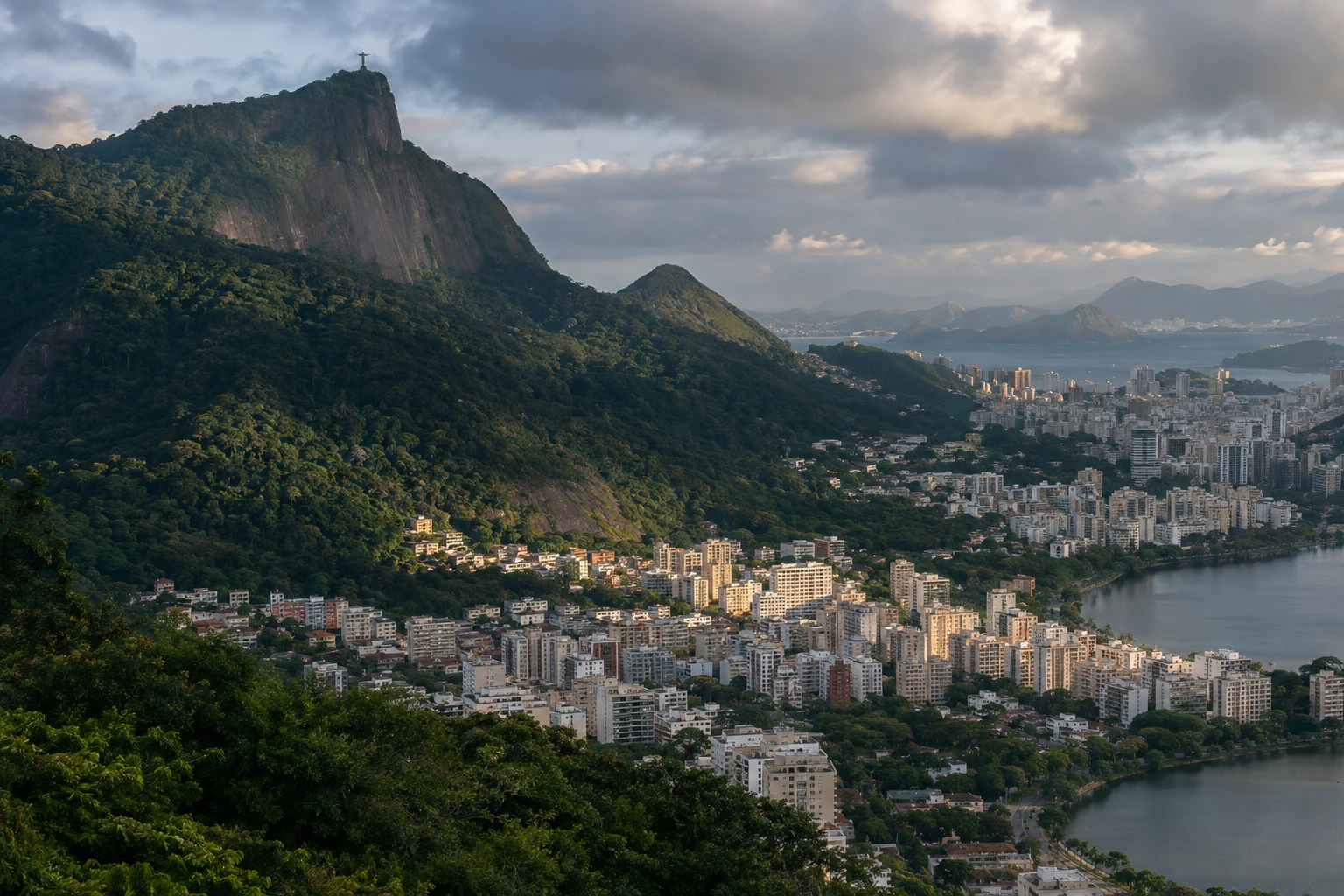
Rio reveals a relationship between a city and the natural forms that shape it. The Carioca landscape inscription includes mountains, restored Atlantic Forest, the Botanical Gardens, hills around Guanabara Bay and designed coastal landscapes. The view matters because it shows those elements together. A visit becomes richer when the programme lets you move between them.
Four nights can support more than one kind of attention. Give a landscape outing a generous day rather than making it an obstacle course of appointments. Pair another day with culture, and leave some time to spend in the neighbourhood where you are staying. Rio’s address matters: a beach base, a congress base and a hotel-led retreat put different parts of the city within the daily routine.
The Museu do Amanhã offers a cultural focus with its own programme and visitor arrangements. Use the institution’s current information to plan the visit. A museum can give a city day a different centre of gravity from another viewpoint. That variety is especially useful when weather or energy changes the preferred order of outdoor plans.
Choose the accommodation after describing the days. Our guide to Rio neighbourhoods and hotels separates the reasons for choosing Copacabana, Ipanema or a Barra event base. The right room is part of the journey, but the address decides much of what happens between leaving it in the morning and returning at night.
Rio can be read at a similarly specific scale. Riotur’s Ipanema geography runs along Avenida Vieira Souto from Arpoador to Jardim de Alah. That gives a beach base a real stretch of city, rather than leaving it as a generic ocean view. The immediate surroundings matter because some of the holiday happens between organised visits: returning for a rest, setting out for a short walk or spending an afternoon close to the hotel.
Santa Teresa’s hilltop cultural setting makes a useful contrast. Alleys, stairs and arts venues create a different type of outing from beachfront time. A city programme can move between those settings through a coherent interest in urban life. Ask how the route will work for the people travelling, including how much walking is wanted and where transport supports the day. The variation should enrich the experience without making every change of scene another demanding undertaking.
Why does Paraty deserve its own chapter?
Paraty deserves time because its historical town and forest setting explain one another. The UNESCO account preserves the relationship between cultural and natural heritage, while its port history prevents the town from becoming simply a picturesque backdrop. Gold and slavery belong in the explanation of its development. A thoughtful guide can help a visitor appreciate the architecture without removing the lives and labour behind it.
A stay can therefore have several distinct textures: a history-led walk, time on the coast and an excursion suited to the surrounding landscape. Choose a few interests and allow them to unfold. The temptation to turn every open morning into a departure can undo the reason for choosing a smaller town. Time without an appointment gives earlier encounters a chance to settle.
Accommodation geography matters here too. A place described through beautiful coastal images may sit outside the town. Decide whether you want to walk into the historic centre, spend more time at the property or reach a particular departure point. Each choice can be valid. The useful description tells you how the stay will work on an ordinary day.
A boat outing should suit the people taking it. Ask about boarding, the vessel, the planned time on the water and the way conditions affect the route. Public photographs cannot answer those questions. Make the practical details clear, then let the experience remain simple. The surrounding water and forest do not require a crowded programme to justify the stay.
Ada Tours’ family-travel discussion raises a practical constraint that can otherwise vanish behind the photographs: distance and transport burden. Use that concern to ask how the route reaches the chosen coast and how many complete days remain once it does. A longer stay in one base can be a deliberate choice, especially when the party wants rest and discovery in the same holiday. Count the days the family will actually enjoy there.
How should Iguaçu enter the route?
Give Iguaçu a concentrated nature chapter with complete visiting days. UNESCO places the waterfall landscape across Brazil and Argentina, a reminder that one natural system can create separate visitor programmes. Decide whether you want the Brazilian side alone or a crossing to the Argentine side, then reserve the time that choice needs.
The border is a planning detail with an effect on the day. Check each traveller’s documents and current entry arrangements before committing to the crossing. The aim is to make the visit feel easy because its requirements were understood beforehand. An itinerary should explain the international movement rather than bury it inside the phrase both sides.
Consider how the party experiences a landscape. Walking surfaces, steps, rest opportunities and exposure can change the fit of a particular activity. Tell the planner what is comfortable instead of leaving them to infer it from ages or a luxury category. The right programme can be shorter, more focused and more rewarding than a supposedly comprehensive circuit.
Our fourteen-day suggestion gives the falls three nights, creating two potential visit days after arrival. That is an editorial allocation, not a universal minimum. Use it to test the balance of your own route. If a proposed arrival consumes most of a day, do not also count that day as a full encounter with the falls.
At Iguaçu, the human history does not end with park institutions. Argentina’s cultural account recognises Mbyá Guaraní communities in the region. That context helps a guide explain a forest with continuing human life, rather than an empty landscape first made meaningful by a famous visitor. A general visit should not promise a community encounter; the point is to understand the place without erasing the people connected to it.
Brazil’s federal government created the national park by decree in January 1939. Protection and public access became part of the landscape’s later history. The falls are both a natural force and a place people have worked to preserve and visit. Our itinerary story follows the earlier journey of Santos-Dumont into that changing relationship.
The Brazilian park’s visitor information separates the familiar waterfall walk from longer forest exploration. It currently describes the Trilha das Cataratas as approximately 1.5 kilometres, reached by the park’s buses from the visitor centre. Viewpoints lead towards the final walkway and the view of Garganta do Diabo. This is a particular way of encountering the falls: the panorama gradually becomes a closer relationship with individual drops.
The same park publishes a very different option at Poço Preto: a nine-kilometre route into Atlantic Forest, associated with bird observation and environmental interpretation. The two walks answer different interests. A visitor primarily drawn to the waterfall panorama may choose the shorter approach; someone making forest observation a central purpose may investigate the longer route separately. The extra distance changes the day's physical commitment. It should have its own time rather than be added casually after a full waterfall programme.
This distinction gives the three-night stay a more useful shape. The arrival and departure can surround two complete days, with the actual flight times checked against that intention. One day can belong to the waterfall visit; another can develop the particular forest interest or the separately planned Argentine visit. Choosing between them makes the stay personal. The falls need not become a race to fit every available outing into the same afternoon.
Should you choose the Amazon or the Pantanal?
Choose between them through the experience you want, not through the shared promise of nature. The Pantanal conservation inscription describes a protected part of a wetland ecosystem. An Amazon stay develops a different relationship with forest, rivers and access. Ask what a typical programme actually involves before deciding which one belongs in the journey.
The question of water is particularly important. A road-based wildlife programme and a river journey can respond differently to changing conditions. Start with the lodge area, gateway and desired activities, then read the seasonal advice at that level. Our regional seasons guide follows that distinction through the official travel examples.
Enough nights to be there
Give remote stays enough useful nights. The arrival can include several movements after the principal flight, and the departure can require the reverse sequence. Ask how much of the booked stay remains for activities. If wildlife is the reason for travelling, let it determine the route’s shape instead of attaching it to a city-and-coast programme already full of commitments.
Before comparing two nature routes, mark the nights on a calendar and underline every change of bed. Then mark the mornings and afternoons the group actually has for outings. A route can look generous on the page and still offer little time at the place everyone came to see. Ask which activities sit on arrival and departure days and what would remain if the first transfer ran late.
Ada Tours’ nature-route comparison provides useful regional texture: Northern Pantanal, Nobres and Chapada appear as distinct elements, with Jardim d’Amazonia and Campo Novo in the longer version. The examples help an agency discuss which ecosystem and activity gives the trip its purpose. They also make changes of base visible. The difference between eight and twelve days is a choice about time and transitions, not merely a longer title.
The Embrapa account of Pantanal subregions explains why a generic wetland label is too broad for the final plan. Water movement, soils, vegetation and climate vary. Ask where the proposed stay sits and how its programme uses the local conditions. Choose the lodge and gateway around the wetland experience you want. Before settling the dates, ask which outings are planned for those weeks, how they reach the water and what changes if conditions shift.
An Amazon stay can instead begin from the floodplain research associated with Wolfgang Junk and the changing relationship between exposed and flooded environments. That is one possible line of curiosity, not a claim that every lodge offers the same interpretation. Explain the interest to the planner and ask how the particular programme develops it. A nature journey becomes more personal when the desired learning is as clear as the desired level of comfort.
For another route allocation, Passion Brazil’s family programme offers a different allocation to examine. Its Pantanal stay uses Campo Grande and sits among Rio, Foz and Bahia stops. Compare that whole sequence with a northern nature route, rather than exchanging gateways inside an otherwise unchanged plan. The comparison is useful because both the geography and the way the nights are spent become visible.
What makes a private journey feel personal?
A private journey becomes personal through details that change the experience. Describe how you like to spend a day: an early start followed by a long lunch, one demanding excursion with recovery time, or a slower beginning and a shorter afternoon outing. Explain what you want guiding to add. Historical context, wildlife interpretation and practical assistance are different needs.
For a family, start with rooms, rest and the experiences that different generations can enjoy together. If several people want an early outing and others need a slower morning, ask how easily the group can split up and meet again. A hotel that offers room to spend an afternoon apart can make a shared dinner feel like a reunion. Put those arrangements in the enquiry alongside the activities everyone is looking forward to.
For an advisor choosing a local partner, the BLTA operator directory and our DMC comparison offer complementary ways to begin. Look for published interests that match the brief, then test the proposed services and communication through one real itinerary. A broad destination claim is only the start of that conversation.
How much time belongs to the city, and how much to the forest?
Manaus can be the beginning of a city stay and the gateway for a forest stay. Give those chapters separate lines on your itinerary. Set aside time in the city for the performance or visit you choose; the forest programme has its own meeting point, onward transport and arrival time. Ask your planner to show the handover between the two and what you would do if your city arrival moved back by several hours.
Consider two versions of a seven-night Amazon chapter. These are editorial allocations, before selecting the actual lodge and connections. One gives two nights to Manaus and five to a forest or river stay; another gives all seven to the nature programme after the appropriate gateway arrangements. Both total seven nights. The first protects a cultural city chapter. The second concentrates the time around the chosen natural environment. Neither number establishes a transfer time or a lodge’s booking conditions.
In the city-led version, the theatre and its surrounding public space give the Manaus stay a clear cultural focus. Belém supplies a related heritage interest through the other ensemble in the UNESCO property. Adding Belém would create another destination, however, rather than deepen the same Manaus stop without cost. A shared architectural theme is a reason to consider a route; the available nights determine whether that route belongs in this particular holiday.
In the split version, make the two city nights genuinely usable. A very late arrival and an early departure can leave only one intervening day. That may be enough for the intended visit, or it may deserve another night. Draw the actual arrival and onward movements into the proposal before deciding. Night counts describe accommodation; complete days reveal the time available for discovery.
A similar distinction applies to the five nature nights. Ask which part of the first day belongs to reaching the stay and which part of the last belongs to leaving it. The remaining days can then be compared through their activities: how long an outing lasts, where rest fits and whether the same habitat is revisited. These details help a traveller picture a lived experience rather than an abstract forest extension.
Manaus also has its own seasonal pattern. The WMO’s published city series shows relatively lower rainfall in July to September, alongside hotter afternoons. As our regional seasons guide explains, city rainfall does not by itself establish water levels or the activity pattern at a distant stay. The city and the forest need to be joined through the actual programme, not made equivalent by a single weather label.
A city-and-coast route through Rio and Paraty offers another complete journey. It develops the relationship between settlement, designed landscapes and Atlantic Forest without adding an Amazon chapter. Choosing that version leaves more time in its own settings. The question is where your curiosity will be best rewarded, with enough days to move beyond a first impression.
How do you know when the route is ready?
The route is ready to refine when every main stop has a purpose and enough useful time. Read the movements between hotels, rather than only the scheduled flights. Check what adding one more region would displace. If the change removes the only unhurried day in the place you most want to visit, it deserves another discussion.
Keep the ending in mind while planning the beginning. A final domestic connection or long road journey should be assessed against the international departure, with a margin that fits the actual circumstances. A return stay can become another chapter rather than a reluctant buffer. It is easier to enjoy the last day when it has not been asked to repair an overfull route.
A drawing in a bookshop is an invitation to imagine what might follow. A journey begins with a similar incompleteness: a few chosen places, questions still open, days not yet lived. Leave room for the visit to change what you thought you knew. Brazil becomes more compelling when its places have time to acquire people, histories and particular meanings.
What else should you consider?
Where should a first Brazil trip begin?
Begin with the main purpose. Rio can anchor a city-and-coast journey; wildlife or rainforest may call for a different route built around a specific gateway and stay.
Can culture and nature fit in the same trip?
Yes. Rio and Paraty both reward attention to the relationship between cultural places and their natural settings. Choose a manageable number of bases.
Are the Amazon and Pantanal interchangeable?
No. They offer different ecosystems, access patterns and activities. Select the experience first, then discuss the appropriate programme and dates.
How long should I allow at Iguaçu?
Allow complete visiting days after the arrival movement. If you want both national sides, account for separate park visits and the international crossing.
What should a family tell a planner?
Describe room configurations, pace, mobility, meal needs and shared interests. Explain which activities are essential and which can remain optional.
How do I choose a local operator?
Match published strengths to one real brief, then compare the proposed services, regional delivery, traveller contact and commercial conditions.
Sources and further reading
Reviewed 18 November 2026
- Family vacation Brazil
- Which Brazil Nature Route Fits Your Group in 2026?
- Crispim do Amaral e a concepção do Teatro Amazonas
- Teatro Amazonas está resgatando sua história através de documentos raros
- Exposição abre contagem regressiva para 125 anos do Teatro Amazonas (1 October 2021, p. 2)
- Amazonia Theaters
- Visit Brasil regional climate
- UNESCO Carioca landscapes
- Museu do Amanhã official
- Praia de Ipanema
- Santa Teresa Itinerary
- UNESCO Paraty and Ilha Grande
- UNESCO Iguaçu
- Patrimonio cultural / Parque Nacional Iguazú
- Decreto-Lei1.035 de10Janeiro1939
- Parque Nacional do Iguaçu: official visitor experiences
- UNESCO Pantanal
- Colaborador do Inpa, Wolfgang Junk, recebe Doutor Honoris Causa da Ufam por trajetória de pesquisas sobre a Amazônia
- O Pantanal
- Family Trip
- BLTA DMC directory
- WMO/INMET Manaus: monthly climate normals, 1961 to 1990